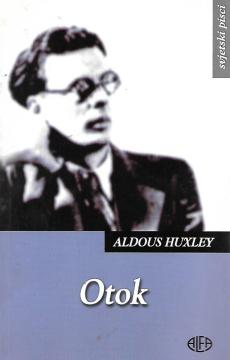
Otok
The Island is a 1962 utopian manifesto and novel by Aldous Huxley, the author's last work before his death in 1963. Although it has a plot, the plot mainly serves to further conceptual exploration rather than to set up and resolve the usual narrative tens
The novel The Island (1962), Huxley's final and utopian manifesto, contrasts with his dystopia Brave New World. The story takes place on the fictional island of Pala in the Indian Ocean, where an ideal society has been established that combines Eastern mysticism (Mahayana Buddhism, yoga, hypnosis) with Western science. The inhabitants live in harmony with nature, practice meditation, maithuna (controlled sex), and use the hallucinogenic drug moksha for spiritual enlightenment and extrasensory perception. The society has no army, uses mutual parenting club (MAC) systems, bilingual culture, and selective technology for sustainability, emphasizing the present moment, compassion ("karuna"), and facing death.
The protagonist, a cynical English journalist, Will Farnaby, finds himself stranded on the island after deliberately sinking a ship to negotiate oil rights for his employer, oil baron Aldehide. Injured, he is found by local children and taken to Dr. Robert MacPhail, a doctor and sage. There, he meets Susila, a hypnotherapist and widow, who guides him through hypnotherapy where he confronts his traumatic past: the death of his wife Molly after his infidelity and an unhappy childhood.
Farnaby learns about the island's history: Scottish doctor Andrew MacPhail (Robert's grandfather) heals old Raja in the 19th century and introduces science, creating a syncretic culture. He reads Raja's notes on self-improvement and tours the educational system that integrates art, science and spirituality. He discovers the puppet show "Oedipus in Pali" with a happy ending, parrots that remind him of "care" and "compassion".
However, the island is threatened by external influence - Queen Rani and her son Murugan, raised in Western materialism, want to "modernize" Pala by selling oil to the neighboring dictator Dipi. Rani sees the Pala practices as blasphemous and seeks traditional reforms. Farnaby, in convincing Rani, witnesses Robert's wife Lakshmi dying of cancer, a symbol of facing death.
A pivotal moment is Farnaby's experience of moksha with Susila: hallucinations open up visions of unity, ego loss, and beauty in all things, including nature (e.g., a praying mantis that eats its mate). But the idyll is shattered: Murugan announces the invasion of Rendang-Loba, the army takes the island, kills Dr. Robert, and Pala falls under militarism and consumerism.
Jedan primjerak je u ponudi