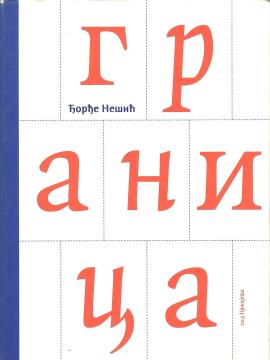
Granica

Granica

Đorđe Nešić

The collection is one of Nešić's key books from the post-war period of the 1990s, when he faced exile, minority status, and identity fractures on the border of two worlds – Croatian and Serbian, Slavonian and Danube.

The title "Border" is a multi-layered symbol: a physical border (the Danube, the state line), a border between the past and the present, life and death, memory and oblivion, and the border of humanity in war and the post-war period. The poems are intimate, melancholic, with strong homeland motifs: the Danube as an eternal river that carries memories, the villages of Bijelo Brdo and Dalj, vineyards, houses, people who stayed or left.

Nešić writes about the minority position of Serbs in Croatia – about silence, fear, loss of language and culture, but also about resistance through poetry and memory. The verses are precise, rhythmic, with a touch of lyrical minimalism and deep sadness, but without pathos – more contemplative than accusatory. The border becomes a place of encounter and separation, where identity is sought in fragments.

The collection is part of Nešić's oeuvre dedicated to homeland, gender, and language (along with "The Window Through Which the Danube Flows", "It's Better to Be in the Minority"). It is valued in Serbian literature in Croatia as a testament to the survival of culture on the edge, with an emphasis on the silent power of words as a barrier against oblivion.

Editor
Čedomir Višnjić
Maße
18 x 13 cm
Seitenzahl
60
Verlag
SKD Prosvjeta, Zagreb, 2006.
 
Kyrillisch Schrift. Taschenbuch mit Einband.
Sprache: Serbisch.

Angeboten wird ein Exemplar

Zustand:Gebraucht, in ausgezeichnetem Zustand
Zum Warenkorb hinzugefügt!
 

Interessieren Sie sich für ein anderes Buch? Sie können das Angebot über unsere Suchmaschine suchen und finden oder Bücher nach Kategorien durchsuchen.

Diese Titel könnten Sie auch interessieren

Sto pedeset godina od dolaska Jakova Ignjatovića u Dalj (1863.-2013.)

Sto pedeset godina od dolaska Jakova Ignjatovića u Dalj (1863.-2013.)

Đorđe Nešić

Proceedings of the international scientific conference held in 2013 in Dalj, on the occasion of the 150th anniversary of the arrival of the Serbian realist writer Jakov Ignjatović (1822–1889) in Dalj.

Kulturni i znanstveni centar Milutin Milanković, 2014.
Serbisch. Kyrillisch Schrift. Taschenbuch.
4,98
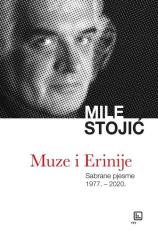
Muze i Erinije : Sabrane pjesme : 1977. - 2020.

Muze i Erinije : Sabrane pjesme : 1977. - 2020.

Mile Stojić

Writing in the first person singular, Stojić depicted the life and dreams, experience and fate, defeat and loss of homeland of a generation, a city, an era.

VBZ, 2021.
Kroatisch. Latein Schrift. Hardcover.
21,98
Susretanja

Susretanja

Ajka Tiro Srebreniković
Kulturno društvo Bošnjaka Hrvatske "Preporod", 2017.
Kroatisch. Latein Schrift. Taschenbuch.
3,50
Nestorov pehar

Nestorov pehar

Asmir Kujović

As one of the rare poets of today who has avoided the trap of so-called 'realistic' or 'narrative' poetry, Asmir Kujović has offered a kind of aesthetic guide from the anxiety of the 20th century in all his poetic works to date.

Buybook, 2019.
Kroatisch. Latein Schrift. Taschenbuch.
7,64
Uglavnom pridjevi

Uglavnom pridjevi

Hrvoje Jurić

The collection "Uglavnom adjevjevi" by Hrvoje Jurić brings together ten cycles of poetic sketches and poems.

Algoritam, 2014.
Kroatisch. Latein Schrift. Taschenbuch.
8,14
Zvjezdani voz

Zvjezdani voz

Mirko Banjević
Zora, 1951.
Kroatisch. Latein Schrift. Taschenbuch.
2,32