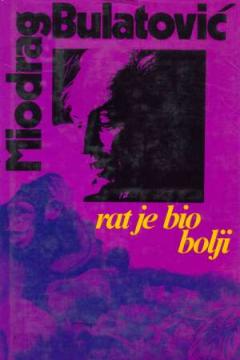
Rat je bio bolji

Rat je bio bolji

Miodrag Bulatović

Conceived and realized as a separate entity, this novel can also be interpreted as the second part of the book "The Hero on the Donkey." To a greater extent than in "The Hero," here the war "which was better" is depicted as a gigantic burlesque and a pool

The novel The War Was Better (published in 1977) is one of the most significant early works of Miodrag Bulatović, with which he entered the top of modernist prose in Yugoslav literature. The work depicts the absurdity and moral paradox of the time after the war — the moment when armed struggle ends, but spiritual destruction begins.

The action takes place in the post-war Montenegrin and Balkan environment, full of war veterans, defeated heroes and people who cannot find their peace. Through grotesque images and a sarcastic tone, Bulatović depicts characters who, having survived the war, lose the meaning of existence in peace. The war was terrible, but at least it gave the illusion of purpose and identity; peace, on the contrary, creates alienation, hypocrisy and inner emptiness.

The author uses recognizable elements of his style — a combination of brutal realism, fantastic visions and black humor. The characters are caricatures and symbols of a lost generation, while the events are charged with irony: those who fought for ideals now become hostages of greed and the meaninglessness of everyday life.

Bulatović thereby creates a powerful parable about a man who no longer knows how to live without conflict, because peace exposes true nothingness. The war was better is not only a commentary on the war experience, but also a philosophical presentation of the permanent human tendency towards destruction and self-annihilation. The novel is recognized as one of the most important anti-war works of South Slavic literature.

Maße
20 x 14 cm
Seitenzahl
282
Verlag
Prosveta, Beograd, 1983.
 
Auflage: 10.000 Exemplare
 
Latein Schrift. Fester Einband mit Schutzumschlag.
Sprache: Serbisch.

Angeboten wird ein Exemplar

Zustand:Gebraucht, in sehr gutem Zustand
Nachteile/Unannehmlichkeiten:
  • Bibliotheksstempel
Zum Warenkorb hinzugefügt!
 

Interessieren Sie sich für ein anderes Buch? Sie können das Angebot über unsere Suchmaschine suchen und finden oder Bücher nach Kategorien durchsuchen.

Diese Titel könnten Sie auch interessieren

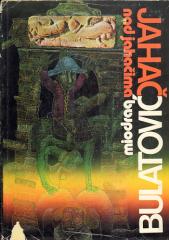
Jahač nad jahačima

Jahač nad jahačima

Miodrag Bulatović

Ein Roman über das Absurde, die Macht und den Untergang eines Mannes, der von Größenwahn besessen ist. In einer symbolischen, grotesken Welt enthüllt der Autor die Grausamkeit von Macht und Wahnsinn, in der Ehrgeiz und Angst die Grenze zwischen Mensch und

Partizanska knjiga, 1980.
Serbisch. Latein Schrift. Fester Einband mit Schutzumschlag.
9,99 €
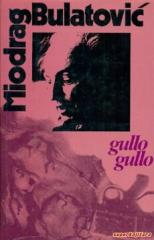
Gullo Gullo

Gullo Gullo

Miodrag Bulatović

„Gulo Gulo“ je groteskno snažan roman o moralnom i duhovnom propadanju ljudskog bića. U svetu nasilja, straha i apsurda, glavni lik luta između života i smrti, dobra i zla, tražeći smisao u tragično iskrivljenoj stvarnosti.

Prosveta, 1983.
Serbisch. Latein Schrift. Fester Einband mit Schutzumschlag.
2,82 €
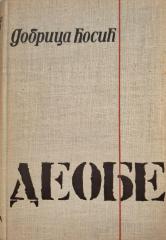
Deobe 1-3

Deobe 1-3

Dobrica Ćosić

Ovo delo, nagrađeno NIN-ovom nagradom za tu godinu, smatra se jednim od najznačajnijih u srpskoj književnosti posle Drugog svetskog rata. Prvo izdanje.

Prosveta, 1961.
Serbisch. Kyrillisch Schrift. Fester Einband mit Schutzumschlag.
Das Buch besteht aus drei Bänden
11,42 €
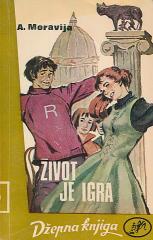
Život je igra

Život je igra

Moravia
Alberto Moravia

Knjiga se sastoji od nekoliko priča koje istražuju složenost ljudskog ponašanja, često kroz ironičan i satiričan prikaz svakodnevnog života.

Svjetlost, 1965.
Serbisch. Latein Schrift. Taschenbuch.
3,46 - 3,72 €
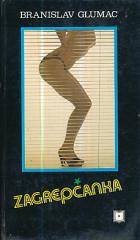
Zagrepčanka

Zagrepčanka

Branislav Glumac

Branislav Glumac je 1974. godine objavio roman bez tačaka i zareza, kao neumoljivi tok misli mladog buntovnika. Objavljeno u socijalističkoj Jugoslaviji, delo je izazvalo skandal svojom otvorenošću i postalo klasik o generacijskoj pobuni.

IROS, 1986.
Kroatisch. Latein Schrift. Hardcover.
8,24 €
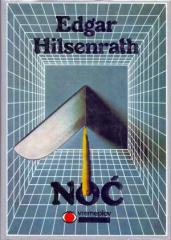
Noć

Noć

Edgar Hilsenrath

Snažan roman koji opisuje život u jevrejskom getu u Ukrajini, zasnovan na autorovom iskustvu kao preživelog Holokausta. Smešten u izmišljenom gradu Prokov, roman prati stanovnike geta, posebno Raneka, dok se bore za opstanak.

August Cesarec, 1982.
Kroatisch. Latein Schrift. Fester Einband mit Schutzumschlag.
6,58 €