Alberto Moravia
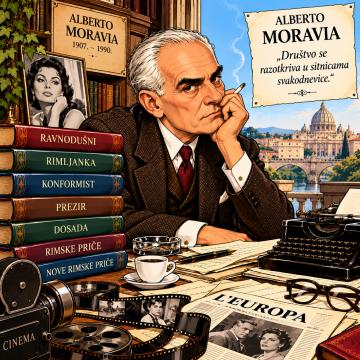
Alberto Moravia (1907–1990)—born Alberto Pincherle—was an Italian writer, novelist, short story writer, essayist, and journalist. He was born on November 28, 1907, in Rome, where he also died on September 26, 1990. He is considered one of the most significant Italian writers of the 20th century, renowned for his psychological analysis of characters, social criticism, and exploration of the alienation of modern man.
His childhood was marked by bone tuberculosis, which required him to spend years in sanatoriums. During his recovery, he read European classics extensively and developed his literary voice. He gained renown with his very first novel, The Time of Indifference (Gli indifferenti, 1929). In it, he portrays the moral emptiness, hypocrisy, and emotional alienation of bourgeois society.
During the Fascist regime, he faced censorship and political pressure. In 1941, he married the writer Elsa Morante, and during World War II, the couple spent some time in hiding to escape persecution.
After the war, he published the novel The Woman of Rome (La romana, 1947), a story about a young woman facing poverty and social constraints. Next came Disobedience (1948), The Conformist (Il conformista, 1951), and Contempt (Il disprezzo, 1954), in which he explores the relationship between the individual and society, sexuality, political opportunism, and the breakdown of interpersonal relationships.
The novel Boredom (La noia, 1960) is one of his most famous works, dedicated to existential emptiness, the impossibility of genuine communication, and alienation. The collections Roman Tales (1954) and More Roman Tales (1959) also hold a significant place, offering vivid portrayals of everyday life in Italian society.
Moravia also wrote travelogues, essays, and film criticism. His works were frequently adapted for the screen, notably The Conformist, directed by Bernardo Bertolucci, and Contempt, directed by Jean-Luc Godard.
His literary style is characterized by clarity of expression, psychological precision, irony, and a critique of bourgeois morality. Moravia left a profound mark on European literature, and his novels remain important testaments to loneliness, social contradictions, and the complexity of human relationships.
Titles in our offer
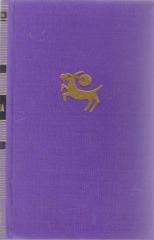
Automat
A collection of 41 short stories: the characters act like "automatons" – mechanical, listless, incapable of authentic reaction to life's problems. Modern man alienated, trapped in routine, sex, money and passivity, without will or feelings.
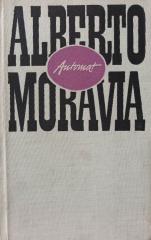
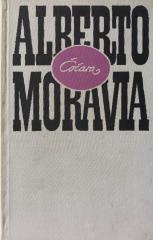
Čočara
Widow Cesira and her daughter Rosetta flee bombed Rome to their native Ciociaria, where they experience hunger, fear and misery. Liberation brings tragedy: Rosetta is raped by Moroccan soldiers, destroying their faith in God and people.
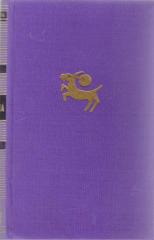
Čočara
Widow Cesira and her daughter Rosetta flee bombed Rome to their native Ciociaria, where they experience hunger, fear and misery. Liberation brings tragedy: Rosetta is raped by Moroccan soldiers, destroying their faith in God and people.
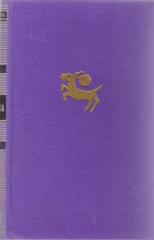
Konformist
Marcello Clerici, obsessed with normality after a traumatic childhood and a homosexual attack, becomes a fascist bureaucrat. He marries the average Giulia, and on their "honeymoon" in Paris, he is assigned to kill a former professor, anti-fascist Quadri.
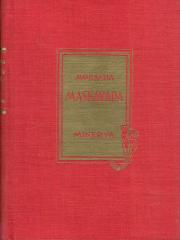
Maskarada / Bračna ljubav
In "Masquerade," Moravia satirically depicts fascist Italy through absurd political intrigue and disguise. "Marital Love" intimately explores erotic tension, possessiveness, and emotional alienation in everyday life.
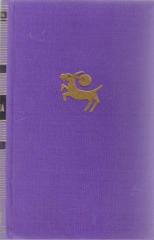
Maskarada / Bračna ljubav
In "Masquerade," Moravia satirically depicts fascist Italy through absurd political intrigue and disguise. "Marital Love" intimately explores erotic tension, possessiveness, and emotional alienation in everyday life.
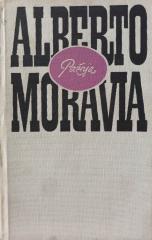
Pažnja
Francesco Merighi returns to Rome after 9 years abroad. In order to write an "authentic" novel, he keeps a diary of his life with his wife and their daughter Babe. He obsessively analyzes lies in relationships, the temptation of
Prezir / Agostino
In "Contempt," screenwriter Riccardo obsessively searches for the reason why his wife Emilia despises and alienates him. In "Agostino," a 13-year-old boy on a summer vacation with his mother experiences a sexual awakening and perceives his mother as a wom