Victor Hugo
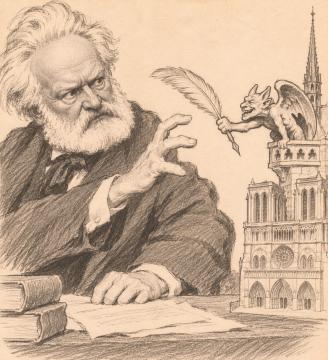
When the bell-ringer Quasimodo carries Esmeralda into the cathedral and claims sanctuary for her, a church threshold decides her fate. In The Hunchback of Notre-Dame (Notre-Dame de Paris, 1831), Victor Hugo makes the cathedral a place where law, mercy and the power of the crowd come into conflict. From its towers, the view opens onto medieval Paris, a city whose history Hugo also reads through its buildings.
Hugo (Besançon, 1802 – Paris, 1885) wrote poetry, plays, novels and political works. In the preface to Cromwell (1827), he argued for a theatre in which the sublime and the grotesque could stand side by side. The premiere of Hernani (1830) turned a debate about the rules of drama into a noisy confrontation in the audience. Hugo emerged as a central figure of French Romanticism.
After Louis-Napoléon Bonaparte’s coup in 1851, Hugo went into exile. He lived on Jersey and Guernsey before returning to France in 1870. In Les Châtiments (1853), he attacked the regime in verse. In Les Contemplations (1856), he revisited the loss of his daughter Léopoldine. In the poem Demain, dès l’aube…, the destination of a walk is revealed only in the final lines. He is going to her grave.
In Les Misérables (1862), Jean Valjean leaves prison, but his past still determines how people receive him. An encounter with a bishop who shows him mercy changes the course of his life. As Inspector Javert pursues him, the stories of Fantine, Cosette and Gavroche widen the novel’s scope to poverty, punishment and the possibility of starting again.
Hugo also wrote Toilers of the Sea (Les Travailleurs de la mer, 1866) on Guernsey. Its solitary hero, Gilliatt, struggles to salvage a steam engine from a wreck. In Ninety-Three (Quatrevingt-treize, 1874), Hugo returns to the French Revolution and to people forced to choose between political duty and mercy. It is the same difficult choice that, in Les Misérables, can come down to a single gesture towards a man at the door.
Titles in our offer
Cosette / Gavroche
Cosette, a mistreated little girl, and Gavroche, a resourceful Paris street child, reveal a world of poverty and injustice. These stories from Hugo’s Les Misérables celebrate compassion, courage and dignity.
Gavroš
A touching story drawn from the novel *Les Misérables* follows the brave and fearless Parisian boy Gavroche, who, through his cheerfulness, defiance, and selfless sacrifice, becomes a symbol of the fight for freedom and justice.
Jadnici
An epic tale of redemption, sacrifice and hope, with an emphasis on the moral struggle of the individual in a ruthless society. Hugo's ability to combine philosophical depth with suspenseful action makes the work timeless, and its message of justice and h
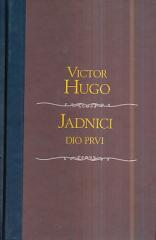
Jadnici - 1. dio
The novel follows the lives and relationships of several French characters over a twenty-year period in the early 19th century that includes the Napoleonic era and the decades after it.

Kozeta
Cosette is a fictional character in the 1862 novel Les Misérables by Victor Hugo and in many adaptations of the story for stage, film, and television. Her birth name, Euphrasie, is mentioned only briefly.

Kozeta
*Cosette* follows the unhappy childhood of the young girl Cosette, who is mistreated by the Thénardiers, and her rescue after meeting Jean Valjean. The story tells of suffering, kindness, love, and hope for a better life.

Zvonar bogorodičine crkve
The Bell Tower (1831) is not just a story of love and tragedy – it is a vivid picture of Paris on the threshold of the Renaissance, where the Gothic Notre-Dame Cathedral becomes almost the main character, a living being of stone that breathes history, suf
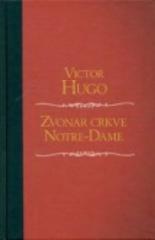
Zvonar crkve Notre-Dame
Hugo's novel about medieval Paris at the end of the 15th century, written in the spirit of Romanticism. It is a novel of human passions, a novel about three unhappy loves, but above all it is an epic about the Cathedral as the "main character" and represe