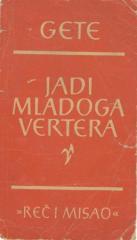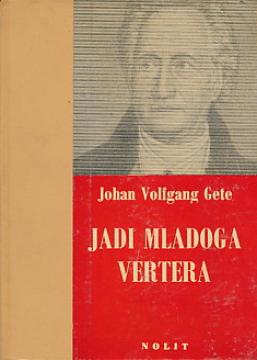
Jadi mladoga Vertera
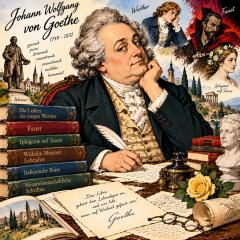
Goethe's masterpiece of an epistolary novel from 1774 (revised in 1787), pivotal to the Sturm und Drang movement, caused a cultural upheaval in Europe – a wave of suicides, "Wertherism" and the imitation of heroes in fashion and sentiment.
The novel is a series of letters from the young Werther to his friend Wilhelm (plus diary entries and editor's comments). The sensitive, passionate and brilliant young man escapes the city's narrowness to the idyllic village of Wahlheim. There he meets Lotte (Charlotte), a beautiful, sensible girl who takes care of her younger siblings after the death of her mother. Werther falls madly in love - Lotte is engaged to the solid Albert, who later becomes her husband.
Part one: the euphoria of love, intoxication with nature, Homer, Ossian, dance and innocence. Werther idealizes Lotte as perfection, and himself as infinite sensitivity. Part two: a collision with reality - Albert's marriage, social norms, Werther's failure in the diplomatic service, deep melancholy and alienation. Love becomes suffering, passion - destruction. Climax: Werther's suicide with a pistol (borrowed from Albert), described poignantly and in detail.
It is not just a love tragedy – a hymn to individual freedom of feeling against reason and conventions, a critique of the bourgeois world and an image of a "genius" man without a place in society. Influenced by Romanticism (Byron, Pushkin, Lermontov), Werther became the archetype of the unhappy lover.
Vinaver's translation (first published in 1949, later reprinted in Laguna and others) is considered unsurpassed – poetically powerful, rhythmic and emotionally charged, it retains the patina of the 18th century, and sounds fresh even today. Today an antiquarian treasure, especially Nolit's edition.
Two copies are available
Copy number 1
- Library stamp
- Traces of patina
Copy number 2
- A message of a personal nature