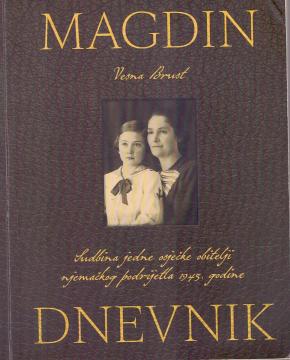
Magdin dnevnik
The fate of an Osijek family of German origin in 1945. As an authentic document of a post-war period, Magda's diary testifies to the victims of ordinary, small people who, although innocent, become guilty in the changed regime.
The novel "Magda's Diary" by Vesna Brust, a Croatian author of German origin, follows the fate of a German family in Osijek after World War II through the diary entries of Magdalena (Magda), a young girl from a prominent Danube Swabian family. The story begins in 1945, when the war ends, and Osijek, a multi-ethnic city full of German heritage – from Art Nouveau palaces to family traditions – faces communist revenge.
Magda, an intelligent and sensitive teenager, records everyday horrors: her father's arrest for alleged collaboration, her mother's concern for survival, the confiscation of her house and property, hunger and fear of the concentration camps. The family, which had contributed to the city's culture for centuries (as merchants, craftsmen and artists), is now declared an "enemy of the people". Magda describes the forced evictions of neighbors to Austria or the GDR, religious conflicts, silence about trauma and loss of identity – the German language is quietly fading, and family stories are sinking into oblivion.
Through Magda’s eyes, we see the generational transmission of pain: her grandfather’s war memories, her mother’s resignation, and her own struggle to preserve her dignity. The novel mixes intimate emotions with historical context – from Bleiburg to post-war repression – denouncing collective guilt and celebrating resilience. Brust, inspired by family history, writes poetically but in raw language, fusing German and Croatian, symbolizing the loss of roots.
In the end, Magda, now an adult, remains in Osijek, carrying the burden of silence, but also the hope of reconciliation. The diary is a tribute to the forgotten Danube Swabians, reminding us that the storms of war do not erase humanity.
No copies available
The last copy was sold recently.