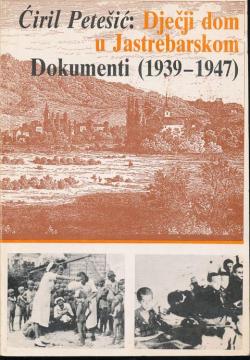
Dječji dom u Jastrebarskom: Dokumenti (1939-1947.)
The book focuses on the period when a children's camp existed in Jastrebarsko for children brought from the Stara Gradiška camp and other Jasenovac camps, from July 12th to the beginning of November 1942.
The reason for this is that a large number of articles, feuilletons, and several books were devoted to this period in our post-war press, but no critical account of the events was given. Another reason is that the most important documents were not published in their entirety. Some of them, if they were quoted, were used for the purpose of a particular discussion or book, but not those parts of the documents that give things a noticeably different light. The third reason is that numerous "memories" were published, created 30-40 years after the events in Jastrebarski during the Second World War. "Memories" were published mostly in fragments, and they are nevertheless second-rate (secondary) documents. For these reasons, I tried to pay as much attention as possible to the publication of the primary documents in their entirety, and in this respect, in my opinion, the value of this book lies. Until now, readers have not had the opportunity to notice that the short history of the children's home in Jastrebarski had several phases: pre-war, when Banovina Hrvatska founded its home for orphans, initial wartime, until the camp for children from the Jasenovac camps was added to the children's home, which existed for almost 4 months, a further phase until the end of the war and a post-war phase. The establishment of a children's infectious disease hospital was particularly significant, which continued to operate as an epidemic hospital after the end of the children's camp. In addition, there were actually three children's homes in Jastrebarski, and they were state children's homes, under the care and supervision of the Banovina Hrvatska, the Ministry of the NDH and after the war the Republic of Croatia.
No copies available
The last copy was sold recently.