Četnici u Drugom svjetskom ratu 1941 - 1945

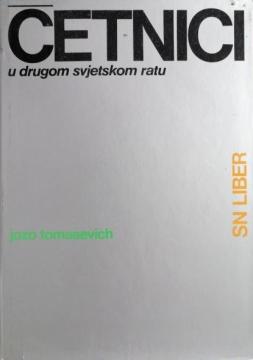
Četnici u Drugom svjetskom ratu 1941 - 1945

Jozo Tomasevich

This scholarly study by Croatian-American historian Jozo Tomašević provides a detailed analysis of the Chetnik movement during World War II.

Tomašević examines the political goals, military strategies, and relations of the Chetniks with the occupying forces, the Partisans, and the Yugoslav government in exile. The Chetnik movement, led by General Draž Mihailović, was initially presented as a resistance to the occupiers, but the author emphasizes that its main goal was the establishment of an ethnically homogeneous "Greater Serbia." This goal was often achieved through cooperation with Italian and German forces, especially in the fight against the Partisans. Tomašević documents numerous cases of collaboration, including agreements with the Italian authorities in eastern Bosnia, where the Chetniks received weapons and logistical support in exchange for refraining from attacking Italian troops.

The author also analyzes the ideological foundations of the Chetnik movement, especially the influence of Stevan Moljević's Memorandum on a "Homogeneous Serbia," which advocated the ethnic cleansing of non-Serb populations from territories earmarked for a future Serbian state. Tomašević describes in detail the crimes committed against the civilian population, especially against Muslims and Croats, which many historians consider genocide.

The book also examines the relationship between the Chetniks and the Yugoslav government in exile, and the changes in British policy towards the Chetniks, which culminated in the withdrawal of support for Mihailović in 1943. Tomašević's study is based on extensive documentation and represents a key source for understanding the complexity of the Chetnik movement and its role in war events in the former Yugoslavia.

"The events in Yugoslavia that followed the breakup of the multinational state in 1941... were so complex that no satisfactorily complete and objective history of that period has yet been written. The appearance of the book "The Chetniks"..., as the first part of the announced three-part study, gives us the promise that we finally have such a complete and complex history in sight... Professor Tomasevich deserves the highest praise for a thorough and objective scientific approach to a very complex subject, for which this book will to remain a basic manual for a long time..." (Stephen Clissold, »English Historical Review«, 1977)

Original title
The Chetniks: War and Revolution in Yugoslavia 1941-1945
Translation
Nikica Petrak
Graphics design
Mihajlo Arsovski
Dimensions
24 x 17 cm
Pages
444
Publisher
Sveučilišna naklada Liber (SNL), Zagreb, 1979.
 
Latin alphabet. Hardcover with dust jacket.
Language: Croatian.

No copies available

The last copy was sold recently.
 

Are you interested in another book? You can search the offer using our search engine or browse books by category.

You may also be interested in these titles

Istočna Hrvatska: Osijek – Vukovar – Ilok (zbornik radova)

Istočna Hrvatska: Osijek – Vukovar – Ilok (zbornik radova)

The collection contains papers from the international scientific conference, Eastern Croatia: Osijek – Vukovar – Ilok, held in 1999.

Pedagoški fakultet, 2002.
Croatian. Latin alphabet. Paperback.
7.98
Na vratima Požeške doline

Na vratima Požeške doline

Dragutin Pavličević

A classic of local historiography, it depicts the history, geography and culture of the Požega Valley from prehistoric times to the modern era. The work describes the region's strategic position, the influences of the Romans, Ottomans and Habsburgs, with

Matica hrvatska, 1961.
Croatian. Latin alphabet. Paperback.
12.36
Iznevjereni grad: Dubrovnik 1991

Iznevjereni grad: Dubrovnik 1991

Petar Kriste

A memoir by Petar Krista, a member of the Dubrovnik Crisis Staff, about the first months of the siege of the city. The work records the political background, military reality, and personal drama of the defense of Dubrovnik.

Golden marketing, 2000.
Croatian. Latin alphabet. Hardcover.
18.56
Korčulanska brodogradnja / Shipbuilding in Korčula

Korčulanska brodogradnja / Shipbuilding in Korčula

Dušan Kalogjera

The monograph Korčula Shipbuilding by Dušan Kalogjera explores the rich history of shipbuilding on the island of Korčula, a key center of Adriatic maritime tradition from the Middle Ages to the present day.

Prometej, 1998.
Croatian. Latin alphabet. Hardcover with dust jacket.
87.32
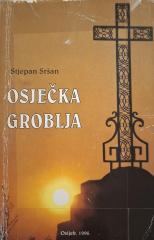
Osječka groblja

Osječka groblja

Stjepan Sršan

The book is deeply rooted in the local history and culture of Osijek, with an emphasis on cemetery motifs that serve as a metaphor for memory, death, and disappearance.

Povijesni arhiv u Osijeku, 1996.
Croatian. Latin alphabet. Paperback.
5.264.21
Komunizam i čovjek: Odnos vlasti i pojedinca u Hrvatskoj (1958.–1972.)

Komunizam i čovjek: Odnos vlasti i pojedinca u Hrvatskoj (1958.–1972.)

Josip Mihaljević

Josip Mihaljević's book analyzes the relationship between the government and the individual in communist Croatia (1958–1972), through repressive mechanisms, ideological pressures, and restrictions on personal freedom in the socialist system.

Hrvatski institut za povijest, 2016.
Croatian. Latin alphabet. Hardcover.
17.26