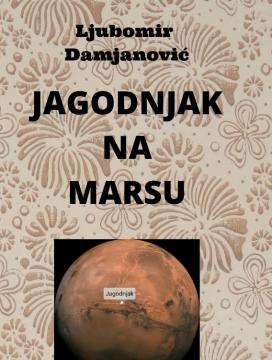
Jagodnjak na Marsu

Jagodnjak na Marsu

Ljubomir Damjanović

"There are slaughters in the yard - every morning someone's cattle. And yesterday we slaughtered three strong ones. So, let's get together until seven, drink some coffee, then go to work.

There is plenty of work for anyone who wants to work for you. First, the gica is slaughtered, then it is poured with hot water into a basket, then it is hung on a rake and cut. This is done by the head shopkeeper, and we help him. Cut it open, remove the intestines and entrails, cut off the head and shoulders and cut it in half. Women clean and wash the bowels. Halves are taken from the rake to form hams, roses, boncek', flintlocks, ribs, meat is separated for processing, bacon, bacon and bacon skins. ....In the evening, there will be everything - soup, boiled, sarma, frisch roast and sausages, then donuts and salenjak, hot'....

Editor
Ljubomir Damjanović
Graphics design
Ljubomir Damjanović
Dimensions
20 x 13 cm
Pages
110
Publisher
Vlastita naklada, Vukovar, 2020.
 
Distribution: 100 copies
 
Latin alphabet. Paperback.
Language: Croatian.

No copies available

The last copy was sold recently.

 

Are you interested in another book? You can search the offer using our search engine or browse books by category.

You may also be interested in these titles

Proizvodnja pokljuka u Požeškom Novom Selu: Separat

Proizvodnja pokljuka u Požeškom Novom Selu: Separat

Zdenka Lechner

Zdenka Lechner, the first ethnologist at the Museum of Slavonia (1951–1965), made significant contributions to the study of the traditional culture of Slavonia, including the use of pokljuc – earthen lids for baking bread and pastries on the hearth.

Muzej Slavonije, 1962.
Croatian. Latin alphabet. Paperback.
6.32
Na vratima Požeške doline

Na vratima Požeške doline

Dragutin Pavličević

A classic of local historiography, it depicts the history, geography and culture of the Požega Valley from prehistoric times to the modern era. The work describes the region's strategic position, the influences of the Romans, Ottomans and Habsburgs, with

Matica hrvatska, 1961.
Croatian. Latin alphabet. Paperback.
12.36
Tri stoljeća Belja

Tri stoljeća Belja

Belje is the oldest business entity in Croatia, which has been operating continuously for more than 300 years. The origin and development of the economy of Belje are conditioned by historical and war events in this part of Europe.

Jugoslavenska akademija znanosti i umjetnosti (JAZU), 1986.
Croatian. Latin alphabet. Hardcover with dust jacket.
56.22
Bolman je bio Bolman

Bolman je bio Bolman

Jovan M. Nedić

Monograph on the Baranja village of Bolman. The book has three main parts: "From the history of the village and the church municipality", "Bolman was Bolman – Vidoja Bijelić's memories" and "Ledari", with a description of Bolman's customs and mentality.

Vlastita naklada, 2012.
Croatian. Latin alphabet. Hardcover.
17.36
Panonija Osijek 1945. - 1970.

Panonija Osijek 1945. - 1970.

Dragomir Lupinski, Lazo Lazarević

The book Panonija Osijek 1945 – 1970 provides a detailed overview of the development of the Osijek company Panonija d.d., specialized in road freight transport, during the crucial period of post-war reconstruction and industrialization.

Panonija, 1970.
Croatian. Latin alphabet. Hardcover with dust jacket.
15.48
Slavonijo, zemljo plemenita: Izabrana proza

Slavonijo, zemljo plemenita: Izabrana proza

Josip Kozarac, Ivan Kozarac, Jozo Ivakić

The collection brings together the works of three prominent Slavonian authors: Josip Kozarac, Ivan Kozarac, and Jozo Ivakić. The anthology provides an in-depth insight into the cultural and social life of Slavonia in the late 19th and early 20th centuries

Spektar, 1974.
Croatian. Latin alphabet. Hardcover.
4.62