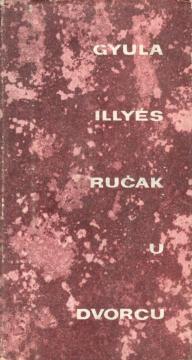
Ručak u dvorcu

Ručak u dvorcu

Gyula Illyes

Lunch in the Castle (1962) by Gyula Illyés is a satirical novella that, through humor and sharp social criticism, depicts class differences and the hypocrisy of the aristocracy in Hungary between the two world wars.

The story takes place over lunch in a luxurious castle, where members of the upper class gather, including counts, intellectuals and their guests. The main character, a young journalist, observes the events with a mixture of fascination and cynicism, noting the absurdity of the behavior of the host and guests.

Illyés skillfully uses lunch as a metaphor for social hierarchy and moral emptiness. The conversations at the table, filled with superficial topics, false politeness and subtle rivalry, reveal the emptiness of the aristocratic world. The novella ridicules the pretentiousness of the elite, their alienation from reality and their inability to cope with changes in society. The young journalist, as an outsider, becomes the voice of the author, who, through his sharp remarks, criticizes class inequality and the decay of the old order.

The style is lively, with elements of irony and witty dialogues, while Illyés's ability to record social nuances makes the work universal. Lunch at the Castle subtly reminds us of the transience of power and the importance of authenticity, leaving the reader with a bittersweet depiction of human vanity.

Original title
Ebéd a kastélyban
Translation
Mladen Leskovac
Editor
Mara Ilić
Graphics design
László Kapitány
Dimensions
18 x 10 cm
Pages
192
Publisher
Forum, Novi Sad, 1964.
 
Latin alphabet. Hardcover with dust jacket.
Language: Serbian.

No copies available

The last copy was sold recently.
 

Are you interested in another book? You can search the offer using our search engine or browse books by category.

You may also be interested in these titles

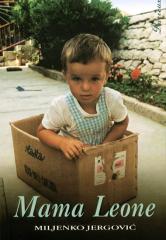
Mama Leone

Mama Leone

Miljenko Jergović

Jergović's stories ironically depict a childhood and an upbringing. The only reality of this autobiographical prose is moving from place to place and from country to country. Strength and beauty are found in the subtle threads with which he weaves his ima

Durieux, 1999.
Croatian. Latin alphabet. Paperback.
8.56
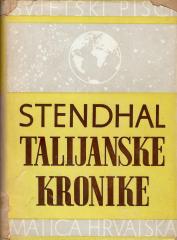
Talijanske kronike

Talijanske kronike

Marie-Henry Beyle Stendhal

Flipping through old Italian chronicles, Stendhal finds motifs for a series of his novels in which he depicts the passions of the Middle Ages and the unrestrained madness of the Renaissance.

Matica hrvatska, 1948.
Croatian. Latin alphabet. Hardcover with dust jacket.
9.36
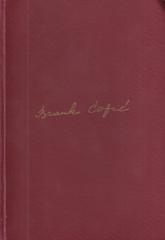
Sabrana djela Branka Ćopića #9: Priče ispod zmajevih krila

Sabrana djela Branka Ćopića #9: Priče ispod zmajevih krila

Branko Ćopić

In the kingdom of butterflies and bears - Experiences of the cat Toša - Stories under the wings of the dragon - The group of heroes

Prosveta, 1964.
Serbian. Latin alphabet. Hardcover.
2.98 - 3.16
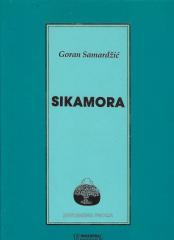
Sikamora

Sikamora

Goran Samardžić

"Sikamura" is a collection that does not offer clear answers, but rather encourages the reader to interpret and reflect, making it demanding but significant in the context of contemporary literature.

Bosanska knjiga, 1997.
Croatian. Latin alphabet. Paperback.
5.98
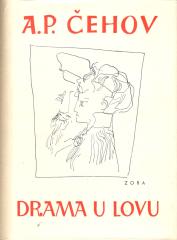
Sabrana djela A. P. Čehova #3: Drama u lovu i druge novele

Sabrana djela A. P. Čehova #3: Drama u lovu i druge novele

Anton Pavlovič Čehov

The third volume of Collected Works contains Chekhov's most extensive novella, "A Drama in Hunting," as well as a number of longer stories from the period 1885-1886. There are humoresques such as Silo in a Bag, Eh, That Audience, and A Lot of Paper, as we

Zora, 1959.
Croatian. Latin alphabet. Hardcover with dust jacket.
8.74
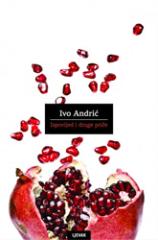
Ispovijed i druge priče

Ispovijed i druge priče

Ivo Andrić

The collection "Confession and Other Stories" brings together lesser-known, but extremely valuable, short stories by Andrić, written mainly in the period 1920–1940, some of which were only published posthumously.

Naklada Ljevak, 2012.
Croatian. Latin alphabet. Hardcover.
21.34