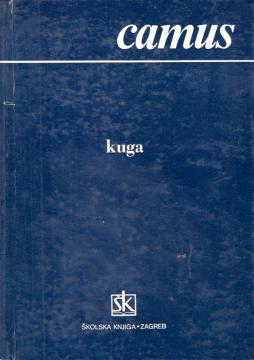
Kuga
Rare book

Kuga

Albert Camus

Philosophical novel set in the Algerian city of Oran, which is affected by a plague epidemic. The work, written in the form of a chronicle, explores the human reaction to suffering, the absurdity of life and the search for meaning in crisis, reflecting Ca

The story begins when Dr. Bernard Rieux notices the first signs of the plague – dead rats in the streets. Soon the disease spreads, and Oran is isolated from the world. Through Rieux’s eyes, we follow the various characters and their responses to the crisis: the journalist Raymond Rambert tries to escape to return to his loved one; the priest Paneloux seeks a religious explanation; Jean Tarrou, an idealist, organizes resistance against the plague; while Joseph Grand, a humble clerk, symbolizes quiet perseverance. Each character represents a different attitude towards absurdity and evil.

The plague becomes a metaphor for evil in the world, including war, totalitarianism, and mortality itself. Camus emphasizes that evil cannot be completely resisted, but that the fight against it – even without final victory – is what makes a person human. Rieux, although aware of the absurdity, chooses solidarity and action, rejecting despair.

The novel is rich in symbolism, and Camus’s language is restrained but powerful, creating an atmosphere of claustrophobia and hope. The Plague is not just a story about an epidemic, but a universal meditation on courage, togetherness, and resistance in the face of the inevitable. The work remains relevant, encouraging readers to reflect on moral choices in times of crisis.

Original title
La Peste
Translation
Ivo Hergešić
Editor
Ivo Hergešić
Graphics design
Jelena Musić
Dimensions
20 x 14 cm
Pages
202
Publisher
Školska knjiga, Zagreb, 1980.
 
Latin alphabet. Hardcover.
Language: Croatian.

No copies available

The last copy was sold recently.
 

Are you interested in another book? You can search the offer using our search engine or browse books by category.

You may also be interested in these titles

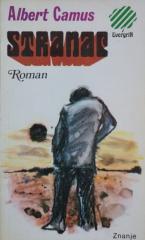
Stranac

Stranac

Albert Camus

The novel The Stranger (1942) is a work by French writer Albert Camus and a key text of existentialism and the absurd. The novel is written in a concise, almost monotonous style, which enhances the feeling of alienation.

Svjetlost, 1988.
Serbian. Latin alphabet. Hardcover.
1.78 - 2.98
Stranac

Stranac

Albert Camus

The Stranger is a novel by French writer and philosopher Albert Camus. Published in 1942, it is one of the most significant novels in twentieth-century French literature and one of the best literary depictions of the absurdity of human existence.

Znanje, 1980.
Croatian. Latin alphabet. Paperback.
5.62
Stranac

Stranac

Albert Camus

"The Stranger" (1942) by Albert Camus, a classic work of existentialism, follows the life of Meursault, an emotionally indifferent Algerian of French descent, whose apathetic attitude towards the world leads to tragic consequences.

Zora, 1951.
Croatian. Latin alphabet. Paperback.
13.46
Lady Hamilton

Lady Hamilton

Alexandre Dumas

The novel represents one of Dumas' lesser-known, but still very interesting historical-biographical novels.

Epoha, 1966.
Croatian. Latin alphabet. Hardcover with dust jacket.
4.78
Robin Hood

Robin Hood

Alexandre Dumas

Dumas portrays Robin Hood not only as a bandit who helps the poor, but also as a heroic fighter for justice and a symbol of resistance to feudal injustice.

Epoha, 1966.
Croatian. Latin alphabet. Hardcover with dust jacket.
4.26 - 4.82
Ljubičice u srijedu

Ljubičice u srijedu

Andre Maurois

André Maurois, a French writer known for his psychological novels and biographies, explores themes of family relationships, love, and internal conflicts in this work, which is characteristic of his style.

Svjetlost, 1965.
Croatian. Latin alphabet. Paperback.
3.42 - 3.62