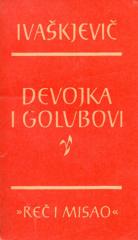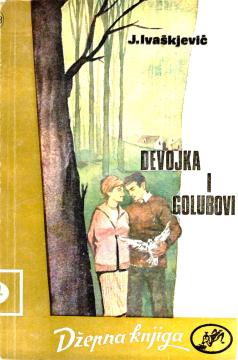
Devojka i golubovi

Devojka i golubovi

Jaroslaw Iwaszkiewicz

Young Edek lives with his elderly father who tries to keep his son by his side. The boy's longing for freedom and a girl clashes with his father's possessiveness. The pigeons symbolize unattainable freedom. The conflict leads to a tragic ending.

“The Girl and the Pigeons” is one of the most famous stories by Jaroslav Iwaśkiewicz (1894–1980), published in 1955 in the magazine “Twórczość”. The story takes place in post-war Poland (probably the 1950s), in a family home where a father – a lonely engineer-architect – lives with his younger son Edek. The father, aware of his own old age and fear of loneliness, unconsciously becomes possessive of his son, wanting to keep him with him as long as possible. Edek, a young man in the process of maturing, feels an increasing inner longing for freedom, love and independence – embodied in the image of a girl and symbolically in the pigeons flying freely above the house.

Iwaśkiewicz subtly builds a psychological conflict: the father does not realize how much he is stifling his son, and the son cannot express his rebelliousness without feeling guilty. The pigeons – the birds that the boy watches and feeds – become a metaphor for unattainable freedom, youthful longing and transience. The story culminates in a tragic clash of generations: the father feels that “tragedy is approaching” and that life will take his son away from him, while Edek tries to break free from this emotional trap.

The story is a classic example of Iwaśkiewicz’s style: lyrical, introspective, with a deep dive into the human psyche, subtle symbolism and a sense of melancholic inevitability. There is no pathos, but a quiet but powerful drama of family relationships and the transience of life. The story was based on the 1973/74 TV film “Dziewczyna i gołębie” (dir. Barbara Sass) starring Jadwiga Jankowska-Cieślak and Andrzej Seweryn.

Naslov originala
Dziewczyna i gołębie
Prevod
Petar Vujičić
Urednik
Risto Trifković
Naslovnica
Mirko Stojnić
Dimenzije
16,5 x 11 cm
Broj strana
235
Izdavač
Svjetlost, Sarajevo, 1965.
 
Latinica. Broširano.
Jezik: Srpski.

Jedan primerak je u ponudi

Stanje:Nekorišćeno
Dodato u korpu!
 

Zanima Vas i neka druga knjiga? Možete pretražiti našu ponudu pomoću pretrage ili prelistati knjige po kategorijama.

Možda će Vas zanimati i ovi naslovi

Devojka i golubovi, Mlin na kamjoni

Devojka i golubovi, Mlin na kamjoni

Jaroslaw Iwaszkiewicz
Rad, 1964.
Srpski. Latinica. Broširano.
0,99
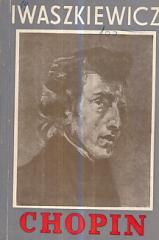
Chopin

Chopin

Jaroslaw Iwaszkiewicz
Nakladni zavod Hrvatske, 1949.
Hrvatski. Latinica. Broširano.
1,00 - 2,00
Pionirska triologija: Sabrana djela Branka Ćopića #11

Pionirska triologija: Sabrana djela Branka Ćopića #11

Branko Ćopić

Orlovi rano lete - Slavni rat - Bitka u Zlatnoj dolini

Prosveta, 1964.
Srpski. Latinica. Tvrde korice.
3,86
Šinjel i druge pripovijetke

Šinjel i druge pripovijetke

Nikolaj Gogolj

Priča o Gogolju je priča o tragičnom talentu, misticizmu i ludilu, o rukopisu koji je izgoreo, o nosu i kaputu, o revizoru i mrtvim dušama.

Civitas, 2004.
Hrvatski. Latinica. Broširano.
6,48
Svetlosti Rima

Svetlosti Rima

Alberto Moravia

In diesen Geschichten untersucht Moravia Themen wie soziale Ungleichheit, den Kampf ums Überleben und menschliche Schwächen und porträtiert sie mit einer Mischung aus Humor, Ironie und realistischer Beobachtung.

Svjetlost, 1965.
Srpski. Latinica. Broširano.
3,82 - 3,92
Mama Leone

Mama Leone

Miljenko Jergović

Jergovićeve priče ironično prikazuju detinjstvo i odrastanje. Jedina stvarnost ove autobiografske proze je selidba sa mesta na mesto i iz zemlje u zemlju. Snaga i lepota nalaze se u suptilnim nitima kojima on isprepliće svoje slike.

Durieux, 1999.
Hrvatski. Latinica. Broširano.
8,56