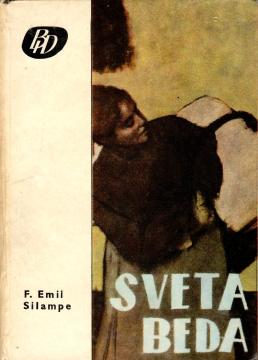
Sveta beda / Ljudi u ljetnoj noći
Rare book

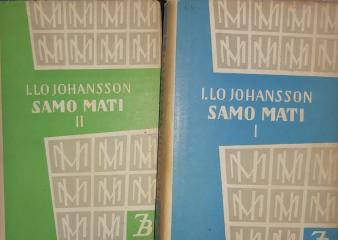
Sveta beda / Ljudi u ljetnoj noći

Frans Eemil Sillanpää

Holy Misery (1919) is a profound, almost sacred hymn to human endurance, where misery is transformed into something sublime, almost religious, in the hands of a Finnish Nobel laureate who masterfully combined naturalism and lyrical tenderness.

The novel follows the fate of a peasant family in the Finnish interior, during a time of difficult social changes at the beginning of the 20th century. The main characters – poor peasants, farm workers, a mother and father struggling for bare survival – bear the burden of hunger, disease, child death and the relentless nature. But Sillanpää does not write a social indictment; he shows that in this "holy misery" – in the humble acceptance of fate, in quiet faith and mutual solidarity – there is a certain pure, almost mystical beauty. Suffering is not just misery; it is a path towards inner purification, towards understanding life as something sacred, even when it is cruel.

The style is simple, almost biblical in its purity: short sentences, repetitions, a rhythm reminiscent of folk songs or prayers. There are no great heroes, no drama; everything is quiet, everyday, but deeply moving. Sillanpää, who won the Nobel Prize in 1939 precisely for this approach to "poor and little people", shows here his greatest strength: the ability to find the transcendent in the most ordinary life.

In the Croatian (or Serbo-Croatian) language, the most famous edition is from 1961, Svjetlost Sarajevo, where the novel is paired with the short story People in a Summer Night. Today the book is an antiquarian rarity, but it also remains one of the most beautiful testimonies of Finnish literature: it does not cry over fate, but celebrates it in its nakedness.

Original title
Hurskas kärsimys
Translation
M. Vučković, Gustav Krklec
Editor
Milica Grabovac
Dimensions
17 x 12 cm
Pages
327
Publisher
Svjetlost, Sarajevo, 1961.
 
Latin alphabet. Hardcover.
Language: Serbian.

Two copies are available

Copy number 1

Condition:Used, very good condition
Damages or inconvenience notice:
  • Traces of patina
  • Slight damage to the cover

Copy number 2

Condition:Used, excellent condition
 

Are you interested in another book? You can search the offer using our search engine or browse books by category.

You may also be interested in these titles

Ja i moj sin

Ja i moj sin

Sara Lidman
Zora, 1965.
Croatian. Latin alphabet. Hardcover with dust jacket.
3.99
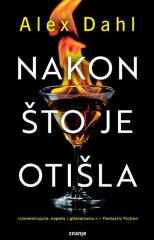
Nakon što je otišla

Nakon što je otišla

Alex Dahl

A quirky, exciting and glamorous psychological thriller. Alex Dahl masterfully portrays the hidden, dark side of the upper class. A thriller about the danger of beauty, the allure of power and wealth, and the ardent love of a mother for her son.

Znanje, 2023.
Croatian. Latin alphabet. Paperback.
5.24
Muškarci koji mrze žene

Muškarci koji mrze žene

Stieg Larsson

The novel that changed the way crime fiction was read. The first part of the "Millennium" series. Although Larsson planned to publish a series of ten novels, he only completed three before his sudden death.

Fraktura, 2008.
Croatian. Latin alphabet. Paperback.
18.42
Putnik

Putnik

Mika Waltari

The novel The Traveler by Finnish writer Mika Waltari, originally published in 1948 under the title Mikael Karvajalka, is a historical fiction that follows the adventures of a young Finn, Mikael Karvajalka, in the turbulent 16th century.

Otokar Keršovani, 1961.
Croatian. Latin alphabet. Hardcover with dust jacket.
4.26
Što nas ne ubije

Što nas ne ubije

David Lagercrantz
Fraktura, 2015.
Croatian. Latin alphabet. Paperback.
16.76
Vitez templar

Vitez templar

Jan Guillou

The Knight Templar is the second part of the extremely popular historical trilogy about the age of the Crusades.

Znanje, 2007.
Croatian. Latin alphabet. Paperback.
3.76 - 3.98