O čemu ne govorimo

O čemu ne govorimo

Slavenka Drakulić

Can you face the taboos of modern society? Old age, illness, weakness. Slavenka Drakulić bravely enters into topics we are reluctant to talk about.

Her stories will shake you to the core and force you to face difficult questions. Everyone knows that they are mortal and that they deteriorate with age, but who can come to terms with that? We don't like to talk or think about illness and death, about loss and defeat, about betrayal, shame, failure or grief. These topics are deeply hidden because today's time favors youth, beauty, speed, with a handful of cheerful and banal content. But Slavenka Drakulić, one of our most translated writers and journalists, in her new collection of stories What We Don't Talk About, has tackled the taboos of contemporary society - her focus is on old age, illness and weakness. Slavenka Drakulić tells the story of marital relationships that disintegrate over time and turn into petty reproaches and permanent resentment, of newfound passion in adulthood, of our imprisonment in the body, of the fact that all our thoughts, all our creativity, all our aspirations and desires, all our psychophysical progress depend on the very thin skin that holds our bodies together. Stories About What We Don't Talk About will shake you to the core, take you on an emotional rollercoaster ride, and force you to ask yourself difficult questions – including the most difficult one, your own duration in time.

Editor
Seid Serdarević
Graphics design
Milica Radojević
Dimensions
21 x 14 cm
Pages
168
Publisher
Fraktura, Zaprešić, 2024.
 
Latin alphabet. Hardcover with dust jacket.
Language: Croatian.

One copy is available

Condition:Unused
 

Are you interested in another book? You can search the offer using our search engine or browse books by category.

You may also be interested in these titles

Mramorna koža

Mramorna koža

Slavenka Drakulić

The novel, written in the first person, describes the complex, distant relationship between a sculptor (the narrator) and her mother. The main characters are the sculptor, a beauty mother obsessed with purity and bodily blemishes, and a stepfather, who en

Grafički zavod Hrvatske (GZH), 1989.
Croatian. Latin alphabet. Hardcover with dust jacket.
8.82
Život u pričama

Život u pričama

Ivana Bodrožić, Slavenka Drakulić, Rujana Jeger, Tisja Kljaković Braić, Maša Kolanović, Julijana ...

Strong women for strong women

Profil Knjiga, 2021.
Croatian. Latin alphabet. Paperback.
6.22
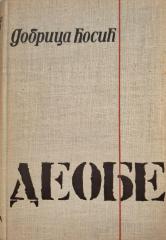
Deobe 1-3

Deobe 1-3

Dobrica Ćosić

This work, awarded the NIN Prize for that year, is considered one of the most significant in Serbian literature after World War II.

Prosveta, 1961.
Serbian. Cyrillic alphabet. Hardcover with dust jacket.
The book consists of 3 volumes
11.42
Amandino vjenčanje

Amandino vjenčanje

Jenny Colgan

A romantic comedy about friendship, love, and the chaotic attempts to save a good man from a bad marriage. A chick-lit hit, it reminds us that friendship saves more than any plan, and love comes unexpectedly.

Znanje, 2001.
Croatian. Latin alphabet. Paperback.
5.36
Proces

Proces

Franz Kafka

Kafka wrote The Process between 1914 and 1915, published posthumously in 1925. The novel is unfinished but with an added final chapter by Max Brod. Edition with a foreword by B. Živojinović and an afterword by Walter Killi.

BIGZ, 1990.
Serbian. Latin alphabet. Paperback.
4.26
Stotina godina (antikronika)

Stotina godina (antikronika)

Dario Harjaček

The novel One Hundred Years by Dario Harjaček provides a panoramic view of Trešnjevka and its inhabitants through a century of changes, ideologies, and human destinies – a mosaic of Zagreb in which life, art, and history intertwine.

Oceanmore, 2025.
Croatian. Latin alphabet. Paperback.
13.42