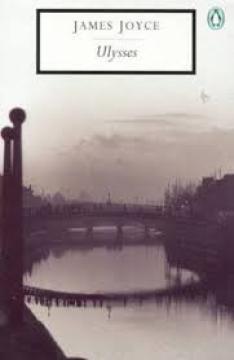
Ulysses
In James Joyce's Ulysses, we follow a day in the life of Leopold Bloom in Dublin in 1904, through interwoven interior monologues, symbolism, and a parody of the Odyssey, exploring identity, everyday life, and human consciousness.
Ulysses by James Joyce is one of the key works of modernism, structured as a parallel to Homer's Odyssey, but set on a single day – June 16, 1904. The story takes place in Dublin and follows three central characters: the young writer Stephen Dedalus, the advertising man Leopold Bloom and his wife Molly Bloom. Each chapter has a distinct stylistic technique, making the novel a literary experiment that explores the boundaries of language, storytelling and perception.
The novel begins with Stephen's inner turmoil and his relationship with family, religion and art. The narrative then shifts to Leopold Bloom, whose daily chores, thoughts, encounters and wanderings are depicted through complex interior monologues. Bloom is an introspective and empathetic man trying to find his place in a world marked by loss and doubt. Bloom and Stephen's encounter late in the evening represents a symbolic moment of spiritual fatherhood and understanding.
Joyce details the urban life of Dublin – from brothels, newspaper offices and streets to family spaces – creating an almost documentary-like picture of the city. Molly Bloom’s final monologue is known as one of the most important streams of consciousness in literature, focusing on love, the body, memories and desires.
Ulysses is a novel about everyday human life presented as a great epic, about the search for identity and meaningful connection between people, and about the inexhaustible possibilities of language.
One copy is available