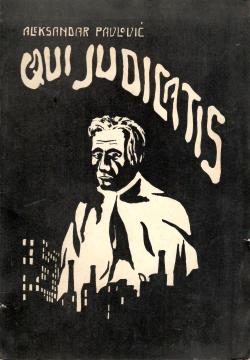
Qui judicatis
Antique
Rare book

Qui judicatis

Aleksandar Pavlović

Psihološko-moralni roman o predstavniku tzv. izgubljene generacije, generacije stasale za vrijeme Prvog svjetskog rata, suočenom s poslijeratnim razočaranjem, moralnim krizama i pitanjem pravde u društvu.

Međuratni roman koji prati život Branka Bugarskog, mladog intelektualca i pripadnika generacije koja je odrastala i stasala tijekom Prvog svjetskog rata. Djelo prikazuje teško prilagođavanje te generacije u poslijeratnom razdoblju unutar nove Kraljevine SHS, obilježeno dubokim razočaranjem u društvo, politiku i moralne vrijednosti.

Kroz Brankovu priču autor istražuje teme moralne krize, licemjerja društva, pravde i ljudske odgovornosti. Naslov Qui judicatis („Vi koji sudite“) aludira na biblijski motiv i središnju ideju djela: kritiku građanskog društva koje osuđuje druge, a samo je prožeto korupcijom, lažnim moralom i duhovnom prazninom. Roman sadrži psihološke analize unutarnjih sukoba glavnog junaka, njegove ljubavne drame, profesionalne frustracije te potragu za smislom i autentičnim vrijednostima u kaotičnom poslijeratnom svijetu.

Stil je ozbiljan, introspektivan i refleksivan, s primjesama društvene satire i moralizma. Knjiga predstavlja zanimljivo, iako slabo poznato, svjedočanstvo o generacijskoj traumi i razočaranju mlade hrvatske inteligencije 1920-ih godina. Izdanje je opremljeno zanimljivom avangardnom naslovnicom grafičara P. Klarića.

Translation
P. Klarić
Dimensions
21 x 15 cm
Pages
103
Publisher
Novinska štamparija S. Pintarić, Zagreb, 1927.
 
Latin alphabet. Paperback.
Language: Croatian.

One copy is available

Condition:Used, excellent condition
 

Are you interested in another book? You can search the offer using our search engine or browse books by category.

You may also be interested in these titles

Baselska zvona

Baselska zvona

Louis Aragon

The novel follows three women: Diane, a noblewoman; Catherine Simonidzé, a feminist; and the real Clara Zetkin, a communist. Through their destinies, the crisis of bourgeois society, women's emancipation, and the path to communism are depicted.

Kultura, 1946.
Serbian. Latin alphabet. Hardcover.
5.76
I ne reče ni reči

I ne reče ni reči

Heinrich Böll

In Boll's novels, one of the central themes is the attempt to preserve basic moral values ​​in a time of terror, as well as in a period of material prosperity and corruption.

Svjetlost, 1965.
Serbian. Latin alphabet. Paperback.
3.22 - 3.98
Kao suza u okeanu I-II

Kao suza u okeanu I-II

Manes Sperber

A trilogy by Austrian-French writer and psychologist Manès Sperber, which, through three novels – "Dust and Ashes", "In the Vortex" and "Memories and Shadows" – explores the themes of totalitarianism, ideological blindness and human suffering during the t

Matica srpska, 1997.
Serbian. Cyrillic alphabet. Paperback.
The book consists of two volumes
9.38
Mati

Mati

Maksim Gorki

Maxim Gorky's novel "Mother" was published in 1906 and is one of the key works of Russian social realism. The work depicts the awakening of the working class in Russia through characters and events that emphasize social injustices and the need for revolut

Svjetlost, 1975.
Croatian. Latin alphabet. Hardcover.
4.26
Pripovijesti

Pripovijesti

Ivan Franko

Contents: Bricklayer, Good earnings, Forests and pastures, Gypsies, On the light, Lady's bread, Note about the writer

Zora, 1950.
Croatian. Latin alphabet. Paperback.
2.96 - 2.98
Hajduk Nikola Šuhaj

Hajduk Nikola Šuhaj

Ivan Olbracht

Hajduk Nikola Šuhaj (1933) is the most famous novel by Ivan Olbracht (real name Kamil Zeman, 1882–1952), a classic of 20th-century Czech literature. One of the most important works of Czech literature between the two wars.

Svjetlost, 1965.
Croatian. Latin alphabet. Paperback.
4.56