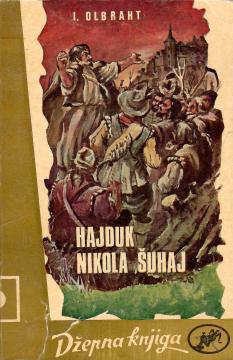
Hajduk Nikola Šuhaj
Hajduk Nikola Šuhaj (1933.) je najpoznatiji roman Ivana Olbrachta (pravo ime Kamil Zeman, 1882.–1952.), klasik češke književnosti 20. stoljeća. Jedno od najvažnijih djela češke književnosti između dva rata.
Roman je smješten u Podkarpatskoj Rusiji (danas Ukrajina, Zakarpatska oblast) nakon Prvog svjetskog rata i raspada Austro-Ugarske. Glavni junak Nikola Šuhaj, mladi seljak iz sela Koločava, vraća se s fronta. Zbog siromaštva, nepravde zemljoposjednika i vlasti, te nemogućnosti normalnog života, postaje hajduk – razbojnik. Počinje pljačkati bogate Židove, trgovce i četnike, ali novac dijeli siromašnim seljacima, što ga čini narodnim junakom i Robin Hoodom Karpata.
Olbracht suptilno prikazuje socijalne kontraste: siromaštvo rusinskih seljaka, korupciju vlasti, antisemitizam i eksploataciju. Nikola nije idealiziran – hrabar je, ali i nasilan, a njegov život pun je opasnosti. Roman kulminira izdajom: 1921. godine njegovi drugovi ga ubijaju za nagradu, a glava mu je odsječena i pokazana kao trofej.
Stil je realističan s elementima narodne legende i balade: autor koristi folklorne motive, dijalektalne izraze i epski ton, stvarajući mit o pravednom razbojniku. Djelo je antiratno i socijalno kritičko, ali bez agitacije – naglasak je na tragičnoj sudbini pojedinca u kaosu poslijeratnog društva.
Roman je doživio veliki uspjeh, ekraniziran više puta (npr. film „Nikola Šuhaj loupežník“ 1978., rež. Jiří Sequens), postao dio narodne mitologije Zakarpata. U Jugoslaviji je bio popularan u poslijeratnim izdanjima, cijenjen zbog humanizma i realističnog prikaza seljačkog života.
No copies available
The last copy was sold recently.