Qui judicatis
Antikvitet
Rijetka knjiga

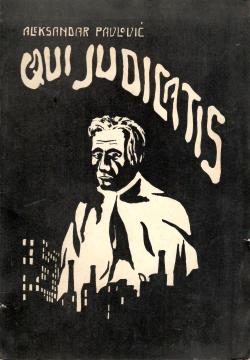
Qui judicatis

Aleksandar Pavlović

A psychological-moral novel about a representative of the so-called lost generation, the generation that came of age during World War I, faced with post-war disappointment, moral crises, and the question of justice in society.

An interwar novel that follows the life of Branko Bugarski, a young intellectual and member of the generation that grew up and matured during World War I. The work depicts the difficult adjustment of that generation in the post-war period within the new Kingdom of SHS, marked by deep disappointment in society, politics and moral values.

Through Branko's story, the author explores themes of moral crisis, social hypocrisy, justice and human responsibility. The title Qui judicatis ("You who judge") alludes to the biblical motif and the central idea of ​​the work: a critique of a civil society that condemns others, while itself is permeated with corruption, false morality and spiritual emptiness. The novel contains psychological analyses of the main character's internal conflicts, his love drama, professional frustrations and the search for meaning and authentic values ​​in a chaotic post-war world.

The style is serious, introspective and reflective, with touches of social satire and moralism. The book presents an interesting, albeit little-known, testimony to the generational trauma and disappointment of the young Croatian intelligentsia of the 1920s. The edition features a cover by graphic artist P. Klarić.

Prijevod
P. Klarić
Dimenzije
21 x 15 cm
Broj strana
103
Nakladnik
Novinska štamparija S. Pintarić, Zagreb, 1927.
 
Latinica. Broširano.
Jezik: Hrvatski.

Jedan primjerak je u ponudi

Stanje:Korišteno, u odličnom stanju
Dodano u košaricu!
 

Zanima Vas i neka druga knjiga? Možete pretražiti našu ponudu pomoću tražilice ili prelistati knjige po kategorijama.

Možda će Vas zanimati i ovi naslovi

Zločin

Zločin

Ivan Potrč

Crime (1955) by Ivan Potrč is a historical novella that focuses on the last days of communist illegals Đuro Đaković and Nikola Hećimović, key figures of the Communist Party of Yugoslavia in the period between the two world wars.

Svjetlost, 1982.
Hrvatski. Latinica. Tvrde korice.
4,28
Čočara

Čočara

Alberto Moravia

Widow Cesira and her daughter Rosetta flee bombed Rome to their native Ciociaria, where they experience hunger, fear and misery. Liberation brings tragedy: Rosetta is raped by Moroccan soldiers, destroying their faith in God and people.

Otokar Keršovani, 1966.
Hrvatski. Latinica. Tvrde korice.
3,96
Žena koja je slikala kanom

Žena koja je slikala kanom

Alka Joshi

„Žena koja je slikala kanom“ je debitantski roman indijsko-američke autorice Alke Joshi, prvi dio trilogije Jaipur. Roman je hvaljen zbog autentičnog prikaza rajasthanske kulture i univerzalne teme ženske emancipacije.

Mozaik knjiga, 2021.
Hrvatski. Latinica. Broširano.
13,2211,90
Krvava arena

Krvava arena

Vicente Blasco Ibanez

Krvava arena (1908.) je naturalistički roman o usponu i padu toreadora Juana Gallarda. Siromašni mladić postaje slavni matador, ali ga uništavaju ljubav, poroci, strah i tragedije u areni – kritika španjolske borbe s bikovima i društva.

Naprijed, 1984.
Hrvatski. Latinica. Tvrde korice s ovitkom.
4,76
Crveni krin

Crveni krin

Anatole France

Crveni krin (1894.) nije samo priča o zabranjenoj strasti – to je suptilna, ironična freska jednog svijeta u kojem se ljubav, politika i umjetnost prepliću u tankoj, gotovo prozirnoj mreži konvencija i želja.

Svjetlost, 1961.
Srpski. Latinica. Tvrde korice.
2,34 - 4,26
I ne reče ni reči

I ne reče ni reči

Heinrich Böll

U Bollovim romanima jedna od središnjih tema je pokušaj da se očuvaju osnovne moralne vrijednosti u vrijeme terora, kao i u razdoblju materijalnog blagostanja i korupcije.

Svjetlost, 1965.
Srpski. Latinica. Broširano.
3,22 - 3,98