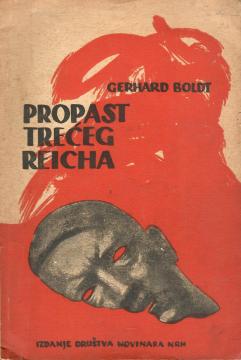
Propast Trećeg Reicha: Posljednji dani kancelarije Reicha
Diary testimony of an officer from the Eastern Front and Berlin in 1945: the collapse of command, the chaos of defense, the illusions and reality of the last days of the Third Reich, told coldly, precisely, firsthand.
The Fall of the Third Reich (1952) brings a direct, field view of the last months of World War II, from the perspective of a German eyewitness and officer. Instead of a “great history” from a time distance, we read scenes from the trenches, command rooms and devastated streets: improvised maps on the table, contradictory orders, the fatigue of men who are still marching because they see nothing else.
At the same time, political illusions are bursting — on paper there are “decisive offensives”, on the ground there is a shortage of fuel, ammunition and hope. Boldt’s prose is dry and precise: short sentences, many facts, few comments. This is precisely what gives it weight: the war is not “interpreted”, it is seen in detail — delayed evacuations, columns of wounded, silence after shelling.
The book combines two levels of reading. As a historical document, it serves as a primary source for the atmosphere of collapse: what the end of the regime looks like from the inside, how the officers react, what the “last line of defense” means when there are no more lines. As a prose unit, it is a tense, readable testimony that leads from the front to the fall of Berlin, without pathos and without myth. The work is valuable for those who want to understand the micro-level of collapse: logistics breaking down, orders losing touch with reality, ordinary soldiers caught between duty and the realization that all is lost.
It is tailored to readers who seek factual clarity and the convincing tone of a witness: for military history buffs, researchers, and anyone who wants to “feel” the last days of the war through a firsthand account.
One copy is available