Cvit razgovora naroda i jezika iliričkoga aliti rvackoga
Rare book

Cvit razgovora naroda i jezika iliričkoga aliti rvackoga

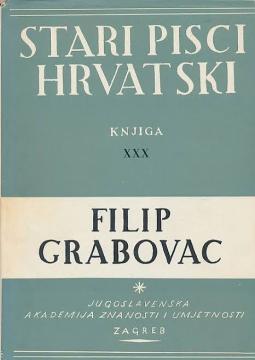
Filip Grabovac

"The Flower of Conversation" is the most famous work of the Franciscan friar and writer Filip Grabovac (1697–1749), first printed in Venice in 1747, and published in a critical edition in the "Old Croatian Writers" edition.

Grabovac's work The Flower of Conversation of the People and the Language of the Illyrian and the Rvac occupies a prominent place in 18th-century Croatian literature and represents an important link between the medieval Croatian tradition, Franciscan literature and later popular enlightenment literature.

The book is conceived as a diverse collection of texts in verse and prose. Its first part is dominated by religious content, moral lessons and spiritual reflections, while the second part presents accounts of Croatian, European and church history, descriptions of wars against the Ottomans and poetic accounts of famous people and events. Grabovac strives to educate and teach a wide circle of readers using simple folk language, making his work an important document of the cultural and linguistic history of the Croatian people.

The special value of The Flower of Conversation lies in the strongly expressed awareness of Croatian identity and historical memory. The author emphasizes belonging to the Croatian people, glorifies heroism in the battles against the Ottomans and criticizes the social and political injustices of his time. It was precisely such attitudes that provoked the reaction of the Venetian authorities, who accused Grabovac of inciting discontent and rebellion, for which he was arrested, and his work banned and partially destroyed.

Today, The Flower of Conversation is considered one of the foundational works of Croatian literary and cultural heritage and an indispensable source for the study of Croatian literature, language, history, and the formation of national consciousness in the 18th century.

Dimensions
24.5 x 17.5 cm
Pages
282
Publisher
Jugoslavenska akademija znanosti i umjetnosti (JAZU), Zagreb, 1951.
 
Latin alphabet. Hardcover with dust jacket.
Language: Croatian.

One copy is available

Condition:Used, excellent condition
Damages or inconvenience notice:
  • Damaged book cover
 

Are you interested in another book? You can search the offer using our search engine or browse books by category.

You may also be interested in these titles

Vojskovođa Svetozar Boroević 1856-1920.

Vojskovođa Svetozar Boroević 1856-1920.

Milan Pojić

Svetozar Boroević, the most capable Austro-Hungarian military leader of the First World War, the only Croat who received the title of field marshal and was awarded the highest Austrian decorations, has been systematically hushed up in Croatian history.

Hrvatski državni arhiv, 2006.
Croatian. Latin alphabet. Paperback.
5.46
Hebrang

Hebrang

Zvonko Ivanković-Vonta
Samizdat, 1988.
Croatian. Latin alphabet. Paperback.
8.36 - 9.99
Rimokatolička crkva i radničko pitanje u Hrvatskoj 1869-1914

Rimokatolička crkva i radničko pitanje u Hrvatskoj 1869-1914

Vinko Cecić
NIP, 1957.
Croatian. Latin alphabet. Hardcover with dust jacket.
4.99
Kata Pejnović

Kata Pejnović

Marija Šoljan Bakarić
Institut za historiju radničkog pokreta SRH, 1977.
Croatian. Latin alphabet. Hardcover with dust jacket.
9.99
Kapucini u Osijeku : gradivo iz bečkog kapucinskog samostana : 1702.-1919.

Kapucini u Osijeku : gradivo iz bečkog kapucinskog samostana : 1702.-1919.

Stjepan Sršan

This book is a valuable resource for anyone interested in the history of Osijek and the role of Capuchins in the development of the city.

Centar Leopold Mandić, 2003.
Croatian. Latin alphabet. Paperback.
6.98
Suputnici bosanske povijesti: sedam stoljeća djelovanja bosanskih franjevaca

Suputnici bosanske povijesti: sedam stoljeća djelovanja bosanskih franjevaca

Ignacije Gavran
Svjetlo riječi, 1990.
Croatian. Latin alphabet. Paperback.
6.84