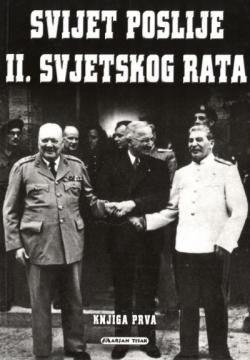
Svijet poslije II. svjetskog rata
One copy is available


One copy is available

Are you interested in another book? You can search the offer using our search engine or browse books by category.
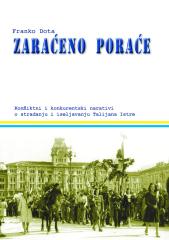
The book analyzes how conflicting historical narratives about the suffering and mass emigration of Italians from Istria and Rijeka developed in Croatia and Italy after World War II (1943–1956), debunking myths and encouraging an empathetic approach to the
Amir Duranović's book reconstructs in detail the dramatic year 1966 and the Fourth (Brion) Session of the Central Committee of the Communist Party of Yugoslavia (July 1–2, 1966), at which Aleksandar Ranković, the long-time head of the UDB and vice preside
The book provides an overview of the history of the Communist Party of Yugoslavia (KPJ) from its founding to the late 1970s, emphasizing its role in the revolution, self-government, and construction of Yugoslavia, with an ideologically colored perspective
The author presents the political and ideological legacy of King Aleksandar I Karađorđević the Unifier. The book, published immediately after the king's death, is an attempt to preserve and transmit his political ideals to future generations.
The book represents a personal chronicle of Croatian history in the first half of the 20th century, written by Josip Horvat with the intention of documenting the social, political, and cultural changes that shaped Croatia between 1900 and 1941.
A book that has achieved extraordinary success. The reader cannot put it down until he has read it to the end. As if in a film, vividly and dynamically, the most dramatic events of World War II unfold before the reader's eyes.