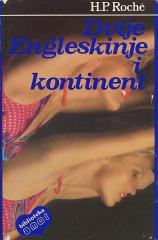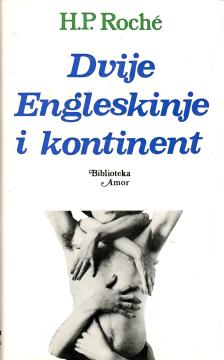
Dvije Engleskinje i kontinent
Two sisters, Ann and Muriel, fall in love with a French student, Claude. A novel about a love triangle, friendship and the clash of cultures between England and France. A masterpiece of French intimate prose.
Two Englishwomen and a Continent (1956) is a novel by Henri-Pierre Roché, a French writer, journalist, and art collector. The work is partly autobiographical and is based on Roché's youthful experiences. The novel achieved cult status thanks to the 1971 film by François Truffaut.
The story follows the love affair between a young Frenchman, Claude, and two English sisters – the older, passionate Ann and the younger, intellectual Muriel. Claude meets them in Paris, and their relationship develops through letters and visits to England. The novel explores the clash of cultures: English puritanism and restraint versus French passion and freedom. The sisters are very different – Ann is emotional and physical, Muriel intellectual and moral – and Claude finds himself trapped between them.
Roché masterfully portrays the psychology of the characters through diary entries, letters, and introspection. The novel is full of subtle eroticism, emotional turmoil, and philosophical reflections on love, friendship, and identity. It is not a classic romance novel, but a profound study of human relationships and the influence of culture on emotions.
The work is written in simple yet poetic language. Roché uses a fragmentary structure that reflects the complexity of feelings. Truffaut's film emphasized the visual and emotional power of the story, making it famous worldwide.
One copy is available