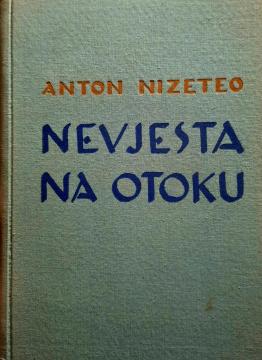
Nevjesta na otoku
This collection of short stories by Anton Nizeteo (1939) presents lyrical and psychologically nuanced tales of love, loneliness, longing, and the quiet life dramas of people on a Dalmatian island on the eve of the Second World War.
The collection Nevjesta na otoku (The Bride on the Island, 1939) holds a special place in Croatian prose from the late 1930s—a period marked by an increasing literary shift toward the individual’s inner world and "lyrical realism." The stories are largely set in a Mediterranean, island environment (primarily on the island of Hvar and along the Dalmatian coast); in Nizeteo’s work, this setting is not merely a piece of folkloric decoration, but a living space permeated by light, the sea, silence, and melancholy. At the heart of these narratives are ordinary, unassuming people—young women awaiting love, solitary women, sailors, the elderly, and the young—all grappling with the transience of life and unfulfilled desires. The title story, Nevjesta na otoku, much like the other pieces in the collection, builds tension through subtle psychological states, unspoken emotions, and a gentle sadness, rather than through crude, external plot twists. Nizeteo’s style is characterized by refined, melodic prose, a rich atmosphere, and deep empathy for human fragility. Due to its lyrical sophistication and Mediterranean ambiance, Nevjesta na otoku remains the most significant prose work by this author—an author whose body of work was, for decades, unjustly neglected in his homeland, largely because he spent his post-war life in exile.
One copy is available