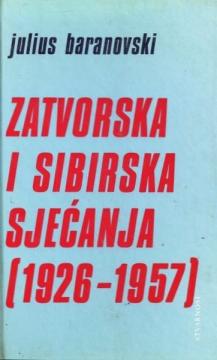
Zatvorska i sibirska sjećanja : (1926-1957)
No copies available
The last copy was sold recently.
No copies available
The last copy was sold recently.
Are you interested in another book? You can search the offer using our search engine or browse books by category.
The book by Raif Dizdarević, one of the last living actors of Yugoslav diplomacy, presents his reconstruction of the most fateful moment of post-war Yugoslavia – the split with Stalin and the Informburo in 1948–1953.
In the book, historian William Klinger investigates the origin and operation of OZNA - the brutal repressive apparatus of communist Yugoslavia, which monitored, imprisoned and liquidated political opponents.
Amir Duranović's book reconstructs in detail the dramatic year 1966 and the Fourth (Brion) Session of the Central Committee of the Communist Party of Yugoslavia (July 1–2, 1966), at which Aleksandar Ranković, the long-time head of the UDB and vice preside
It is a work intended primarily for young people, written in a simple, accessible style, with the aim of creating a positive image of Tito as a revolutionary, statesman and leader of the national liberation struggle.
The author presents the political and ideological legacy of King Aleksandar I Karađorđević the Unifier. The book, published immediately after the king's death, is an attempt to preserve and transmit his political ideals to future generations.
Academician Ljubo Boban, in his work Croatia in the Archives of the Government in Exile 1941–1943, brings together a collection of diplomatic reports from various European and international representative offices of the Yugoslav government in exile during