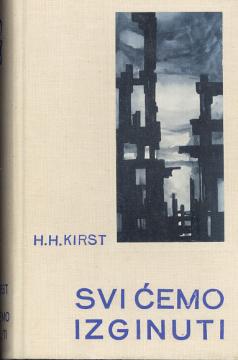
Svi ćemo izginuti
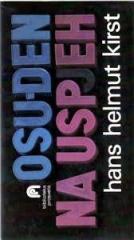
We Shall All Perish (1957) is a cataclysmic novel by Hans Hellmut Kirst, a famous German writer who became famous for his war trilogy “08/15.” It is a realistic, documentary-style depiction of the outbreak of World War III and a nuclear holocaust.
The plot begins with riots in Poland that quickly spread to East Germany. Although politicians and military commanders on both sides of the Iron Curtain try to calm the situation, events get out of control. The chain reaction – demonstrations, interventions, mobilizations, incidents – escalates with incredible speed. In just six days, Europe sinks into total war, and the final blow of atomic weapons occurs in just 24 hours. The novel ends with complete destruction – “no one will escape”.
Kirst presents events through the perspectives of different characters – politicians, soldiers, civilians, the rich, artists and ordinary people – thus creating a mosaic of European society on the verge of collapse. Particularly impressive is the motif of two young people in love (a boy from West Germany and a girl from East Germany) who are constantly looking for each other and finally meet at the very moment when an atomic explosion turns everything to ashes. There are no heroes, no winners, no redemption – only the senseless destruction of everything that humanity has built for centuries.
The book was written in the atmosphere of Cold War tension of the 1950s, with the advice of military and scientific experts, and it seems frighteningly convincing. Kirst offers not only fiction, but also a warning: war can start almost by accident, and nuclear weapons do not choose sides. He criticizes the helplessness of political and military elites, the meaninglessness of ideological divisions and human shortsightedness.
The style is at times reporter-like and documentary - with proclamations, orders and military reports - which gives the novel credibility, but sometimes comes at the expense of the depth of the characters. Despite this, We Shall All Perish remains a powerful and poignant appeal against nuclear war, one of the most memorable European novels about the atomic apocalypse of the 20th century.
One copy is available