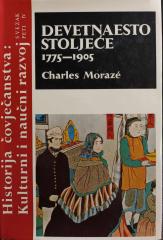
Povijest #12: Kolonijalizam i građanske revolucije
The twelfth volume deals with the period of civil revolutions, the strengthening of industrial production, the American struggle for independence, but also the short-lived victory of the European restoration and the strengthening of colonialism that would
The French Revolution (1789–1799) overthrew the monarchy, bringing ideas of liberty, equality, and fraternity, but also the Terror and the Napoleonic Wars. Napoleon Bonaparte expanded French influence, but his defeat (1815) led to the Congress of Vienna and the restoration of the monarchies.
Colonialism intensified, with Britain and France at the forefront, exploiting Africa, Asia, and the Americas. The slave trade reached its peak, while abolitionist movements grew stronger. The Industrial Revolution, which began in England, transformed the economy through steam engines, railways, and factories, changing social relations. Romanticism in art and literature (Goethe, Byron) reflected an emotional response to rationalism.
The bourgeois revolutions of 1830 and 1848 shook Europe, demanding democratic reforms and national identity. In the Croatian context, the Illyrian Movement and the Revolution of 1848–1849, led by Jelačić, and the fight against Magyarization under the Habsburgs are emphasized.
One copy is available