Antique books
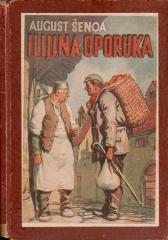
Ilijina oporuka / Lijepa Anka
Book 16 of the Collected Works of August Šenoa combines two powerful narratives: a satirical critique of civic immorality and wastefulness in Ilija's Testament and a romantic, dramatic story of unhappy love and social barriers in Lijepa Anka.

Indijska plesačica
The novel follows the love and social entanglements of British colonial circles in India. Secrets, jealousy and the conflict of different customs connect the destinies of Europeans and Indians in a tense story.

Informator
Informator (1894) is a shorter prose work by Vjenceslav Novak, edited by Slavko Ježić (the third volume of Collected Works). It is one of Novak's most socially engaged texts and is typical of his realistic approach.
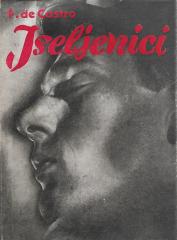
Iseljenici
The book "Emigrants" by the Portuguese writer Ferreira de Castro is one of the most important works of Portuguese literature, published in 1928. Great photomontage and cover by an unknown author from 1940.
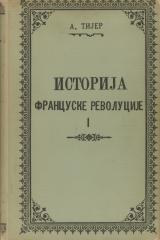
Istorija Francuske revolucije I
Thiers' "History of the French Revolution I" shows the causes of the Revolution, the collapse of absolutism and the beginning of political turmoil in France, and the events of 1789 - the Parliament of the Stales, the National Assembly, the Bastille.
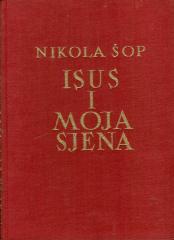
Isus i moja sjena
Jesus and My Shadow (1934) is Nikola Šop's most famous collection. The poet intimately humanizes Jesus and brings him into the everyday life of the poor, nature, and ordinary things. In a Franciscan spirit, he celebrates simplicity, poverty, and the divin

Ivan Hrvaćanin
A historical novel that follows the heroic struggle of Ban Ivan Karlović (a Croat) against the Turkish conquests in Lika and Krbava at the beginning of the 16th century, with an emphasis on the fall of Kosinje, heroism, betrayal, and defense of the Christ

IV. Olympische Winterspiele 1936. Garmich-Partenkirchen, 6. bis 16. Februar: Amtlicher Bericht
Official monograph of the 4th ZOI in Garmich-Partenkirchen in 1936, with numerous illustrations, some in color (including an advertising poster by Ludwig Hohlwein) and 2 double-sided plates.

Izabrana djela, sv. I.: Dramske slike i poeme
The first volume of Pushkin's selected works brings dramatic images and poems: from scenes from Faust and Mozart and Salieri to The Bronze Horseman and Poltava, combining drama, lyricism and history.
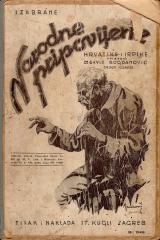
Izabrane narodne pripovijetke hrvatske i srpske
A classic selection of the most beautiful folk tales and fairy tales from Croatian and Serbian oral tradition with an attractive illustration by Andrija Maurović on the cover. The first edition was published in 1914, this is the second, expanded edition.