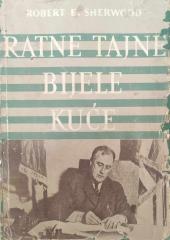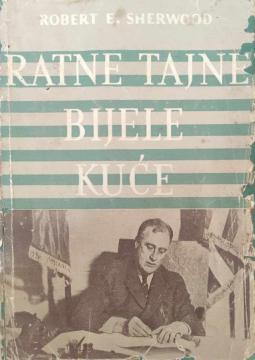
Ratne tajne Bijele kuće II
One copy is available
- Staines on the pages
- Stains on cover
- Damaged book cover
- Damaged covers
- Damaged pages
- Yellowed pages

One copy is available
Are you interested in another book? You can search the offer using our search engine or browse books by category.
The author explores why Tito remains a popular symbol of stability, social security and independence, despite critical views of his regime. The book maps the cultural, political and everyday manifestations of "Titostalgia".
Josip Mihaljević's book analyzes the relationship between the government and the individual in communist Croatia (1958–1972), through repressive mechanisms, ideological pressures, and restrictions on personal freedom in the socialist system.
The collection is an interdisciplinary bridge between Ukrainian and Croatian science, encouraging comparative research on Slavic migrations. It presents the Carpathians as a "living archipelago" connecting East and West, important for Croatian ethnogenesi
The book depicts the development of a Bosnian bey family that, throughout the 19th and 20th centuries, transformed from a landowning family into a modern bourgeois family, reflecting broader social changes in Bosnia and Herzegovina.
Omer-paša Latas in Bosnia 1850–1852 is a historical monograph by the Bosnian-Herzegovinian writer, playwright and publicist Ahmed Muradbegović (1898–1977), published in 1944 by Matica Hrvatska.