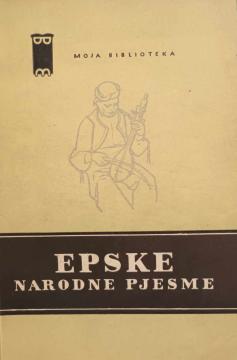
Epske narodne pjesme
A selection of texts with comments and explanations and a discussion of epic folk songs.
Among many peoples, and in various parts of the world, two types of literature developed, from the point of view of the poetic, creative and formative principle. One was created and written by writers in the form of songs, stories dakas, novels, dramas and other literary forms. Their works have been preserved, because they were either handwritten or printed later from the 15th century. We know, mostly and approximately, everything we need about its authors, i.e. when they created their works, how they wrote, what influenced them and what they wanted to say. It is written literature, i.e. the kind of literature for which the national script played a decisive role within the framework of a detailed and specifically elaborated written literary language (1). I am only underlining the indisputable fact that the totality of a national and national language was realized in a certain way, in which the basic legalities were worked out in writing and on the regularities and laws of written expression and communication of thoughts. It should be especially emphasized that the category of writtenness, or the category of written and written (2), i.e. those assumptions and preconditions that arise from the fact of writing, develops the language system in one directed direction and thus achieves only a certain series of possible realizations of the concrete language system, which are present in the written context. The flow of written literature shows, admittedly, a wide range of phonological-phonetic, morphological, syntactic and stylistic components of a language system, especially in its historical reach. But it by no means exhausts it to the end, and no matter how lush, versatile and rich its historical continuity is, many opportunities within one and the same language system necessarily remain unused.
One copy is available
- Traces of patina