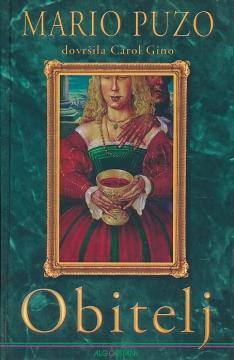
Obitelj

Obitelj

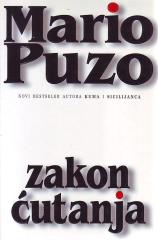
Mario Puzo

Mario Puzo collected material for more than ten years for the story about the darkest Italian family, the Borgias, but he was unable to finish it. It was done by his lifelong companion, the writer Carol Gino.

In the fifteenth century, Italy as we know it today did not exist. Five great powers and independent city-states ruled by old families fought over territory. Society was shaken by turmoil, lawlessness ruled the streets of Rome and the Vatican. Money could buy everything: position in society, pardons, God's forgiveness. At the same time, it was a time of great achievements in the fields of philosophy, art, medicine, music and culture. The early Renaissance was the time of Leonardo da Vinci, Michelangelo and Rodrigo Borgia and his family.

Original title
The family
Translation
Sandra Nikoletić
Editor
Neven Antičević
Illustrations
Igor Kordej
Dimensions
24 x 15.5 cm
Pages
382
Publisher
Algoritam, Zagreb, 2004.
 
Latin alphabet. Hardcover.
Language: Croatian.
ISBN
978-9-53220-198-7

No copies available

The last copy was sold recently.


Are you interested in another book? You can search the offer using our search engine or browse books by category.

You may also be interested in these titles

Srećni hodočasnik

Srećni hodočasnik

Mario Puzo
Veljko Vlahović, 1987.
Serbian. Latin alphabet. Paperback.
4.993.49
Kad žena zri

Kad žena zri

Honore de Balzac
Svjetlost, 1970.
Croatian. Latin alphabet. Hardcover.
4.99 - 5.00
Čovjek s dva lica

Čovjek s dva lica

Lee Child

Released in 2003, "The Man with Two Faces" is the second installment in the rich thriller series by author Lee Child.

Znanje, 2010.
Croatian. Latin alphabet. Paperback.
8.42
Jedna Svanova ljubav

Jedna Svanova ljubav

Marcel Proust
Rad, 1984.
Serbian. Latin alphabet. Paperback.
2.98
Usta puna zemlje

Usta puna zemlje

Branimir Šćepanović

The novel "Usta puna zemlje" (1970), the masterpiece of the Serbian writer Branimir Šćepanović, is a psychologically in-depth explorer of the limits of the human soul, solitude and existential freedom, reminiscent of Kafka and Camus.

BIGZ, 1987.
Serbian. Latin alphabet. Paperback.
3.98
Proces

Proces

Franz Kafka

Kafka wrote The Process between 1914 and 1915, published posthumously in 1925. The novel is unfinished but with an added final chapter by Max Brod. Edition with a foreword by B. Živojinović and an afterword by Walter Killi.

BIGZ, 1990.
Serbian. Latin alphabet. Paperback.
4.26