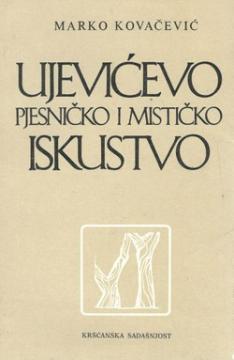
Ujevićevo pjesničko i mističko iskustvo

Ujevićevo pjesničko i mističko iskustvo

Marko Kovačević

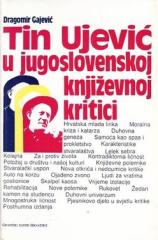
The work analyzes Tin Ujević's theoretical reflections on poetry, with special emphasis on his relationship to mystical experience.

Kovačević explores how Ujević perceived the role of the poet and the nature of poetic creation. Ujević believed that poetry transcends mere aesthetic expression, and has the ability to connect with deeper, mystical levels of existence. The poet, according to Ujević, acts as a mediator between the material world and transcendental spheres, using language as a tool to discover hidden truths.

The author also analyzes Ujević's understanding of mystical experience, which is manifested through his poetry. Ujević often used symbols and metaphors to express the ineffable, trying to bring his own spiritual experiences and introspective insights closer to the reader. Kovačević emphasizes that for Ujević, mysticism was an integral part of poetic expression, allowing him to explore themes such as existence, love, suffering, and spiritual enlightenment.

The book provides an in-depth insight into the philosophical and aesthetic aspects of Ujević's poetics, illuminating his unique ability to combine mystical experience with poetic expression. Kovačević's work contributes to a better understanding of the complexity of Ujević's poetry and his place within Croatian literature.

Editor
Vjekoslav Bajsić
Graphics design
Roko Bolanča
Dimensions
20 x 13 cm
Pages
110
Publisher
Kršćanska sadašnjost, Zagreb, 1982.
 
Latin alphabet. Paperback.
Language: Croatian.

No copies available

The last copy was sold recently.
 

Are you interested in another book? You can search the offer using our search engine or browse books by category.

You may also be interested in these titles

Zlatarovo zlato

Zlatarovo zlato

August Šenoa

The first Croatian historical novel - the most Zagreb of all stories. It is a story about the forbidden love of a goldsmith's daughter and a nobleman's son on the historical stage of Zagreb's streets and squares in the sixteenth century.

Znanje, 1966.
Croatian. Latin alphabet. Hardcover with dust jacket.
2.52
Urota Zrinsko-Frankopanska

Urota Zrinsko-Frankopanska

Eugen Kumičić

The novel "The Zrinjski-Frankopan Conspiracy" (1893) was the most widely read Croatian book for ten years, and, thanks to the interest of readers at the time in historical events, it had a huge influence on younger generations of readers.

Matica hrvatska, 1965.
Croatian. Latin alphabet. Hardcover.
8.566.42 - 10.848.13
Tri poeme

Tri poeme

Gustav Krklec

The three poems were published as a jubilee edition to commemorate the 50th anniversary of life and the 30th anniversary of literary work. For her, he received an award from the NRH Cultural Council. The note about the writer was written by Marijan Matkov

Zora, 1949.
Croatian. Latin alphabet. Paperback.
2.48 - 3.76
Taksi za televiziju

Taksi za televiziju

Vesna Ćuro-Tomić

Nika Gracijani lives in a world that is much more grown up, more serious and less witty than her. Among people who are incomparably better armed in the fight for survival. As a tapir among tigers, lions and most of all coyotes...

Algoritam, 2004.
Croatian. Latin alphabet. Hardcover.
4.36
Krvavi dani Bosne ponosne: historijski roman

Krvavi dani Bosne ponosne: historijski roman

Jakša Kušan

The comprehensive historical novel Bloody Days of proud Bosnia is of its lexical richness, narrative dynamics and lively dialogue, and is among the best works of Croatian storytellers of the classical tradition.

Znanje, 1977.
Croatian. Latin alphabet. Paperback.
The book consists of two volumes
8.42 - 8.65
Kapelski kresovi

Kapelski kresovi

Veljko Kovačević

The book by Veljko Kovačević, a writer and Spanish fighter, tells the story of the dramatic growth of the 1941 uprising in Gorski Kotar and the Littoral.

Mladost, 1975.
Croatian. Latin alphabet. Hardcover.
4.98 - 5.42