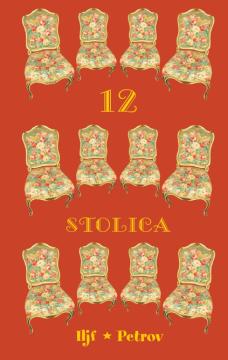
12 stolica

A satirical search for hidden treasure in post-revolutionary Russia. Former nobleman Ippolit Matveyevich Vorobyaninov and con artist Ostap Bender chase after valuables, exposing the greed and absurdities of Soviet society.
The Twelve Chairs (1928) is a classic of Russian satire and one of the most famous humorous works of the 20th century. Its authors, Ilya Ilyf and Yevgeny Petrov, created a vivid story about a society in which revolution, ideals and everyday opportunism collided in a grotesque mix. The plot begins when the former nobleman Ippolit Matveyevich Vorobyaninov, now a modest official, learns that his mother-in-law, before fleeing the Bolsheviks, hid the family jewels in one of the twelve chairs of the former suite.
The search for the treasure is soon joined by the charming and unscrupulous adventurer Ostap Bender, the “great combinator”, who with his humor, cynicism and wit becomes the driving force of the novel. Their journey through the cities and villages of the Soviet Union turns into a series of comic episodes in which the authors ridicule bureaucracy, poverty of spirit, provincial morality and the ruinous ideals of the new times.
The novel is both an adventure story and a sharp social satire – a portrait of a country in transition, where greed, madness and naivety have become the new everyday life. The language is witty and fast, the dialogues are brilliantly rhythmic, and the characters are caricatured but truly human. The Twelve Chairs thus goes beyond the framework of parody and becomes an allegory about human nature, the relentless pursuit of happiness and the ability to laugh as a way of surviving in the absurdity of history.
One copy is available