Zlatno tele
Rare book

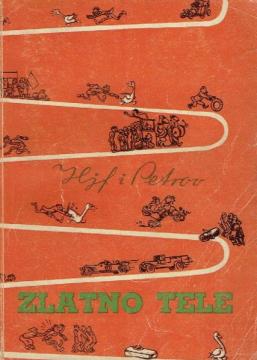
Zlatno tele

Ilja Iljf, Jevgenij Petrov

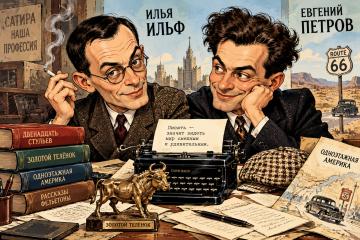
The Golden Calf (1931) is a brilliant satirical picaresque adventure, a sequel to the legendary 12 Chairs, where the great schemer Ostap Bender returns in full glory – charming, cynical, irredeemably cunning and always one step ahead of everyone else.

The story takes place in the Soviet Union in the late 1920s, during the NEP and the beginning of the five-year plan, when old Russia was mixing with new socialist dreams. Ostap Bender, who survived in the first novel (although he did not receive millions), now sets his sights on a new target: the secret treasury of businessman Alexander Koreiko, one of the rare Soviet millionaires who made his fortune through smuggling, bribery and manipulation, and lives modestly as an ordinary accountant. Bender gathers a team of "lieutenant's sons" - a motley crew of swindlers, dreamers and opportunists - and sets off on a grand chase across the entire USSR: from Moscow, through Kharkov, over the railways, to the Black Sea and Central Asia.

The novel is full of hilarious episodes: fake film footage, the "Antelope-Gnu" car that becomes a legend, encounters with bureaucrats, journalists, the police and ordinary people. Bender excels with his aphorisms ("Don't bother, I'll tell you the truth - I'm a great schemer!", "The rich are poor people"), ridiculing the corruption, bureaucracy, greed and hypocrisy of the new society. But beneath the humor lies a bitter note: Ostap is a tragic character - a brilliant swindler who dreams of "Rio de Janeiro" (a symbol of freedom and wealth), but realizes that there is no place for an individual like him in the Soviet Union.

Ilf and Petrov write quickly, humorously, with Odessa charm and a keen eye for the absurd - the novel is full of quotations that have entered the language ("How is life on the Riva?", "Your telegram received, but not understood"). It is a satire on Soviet reality, but also a universal comedy about human greed and illusions.

Original title
Золотой телёнок
Translation
Stjepan Kranjčević
Dimensions
20 x 14 cm
Pages
355
Publisher
Kultura, Zagreb, 1946.
 
Latin alphabet. Hardcover with dust jacket.
Language: Croatian.

One copy is available

Condition:Used, very good condition
Damages or inconvenience notice:
  • Die Abdeckung fehlt
 

Are you interested in another book? You can search the offer using our search engine or browse books by category.

You may also be interested in these titles

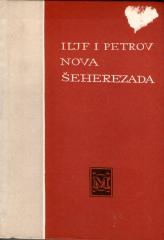
Nova Šeherezada

Nova Šeherezada

Ilja Iljf, Jevgenij Petrov
Grafički zavod Hrvatske (GZH), 1964.
Serbian. Latin alphabet. Hardcover.
4.99 - 5.47
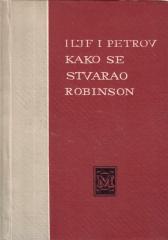
Kako se stvarao Robinson

Kako se stvarao Robinson

Ilja Iljf, Jevgenij Petrov
Grafički zavod Hrvatske (GZH), 1964.
Serbian. Latin alphabet. Hardcover.
4.953.73 - 4.974.95
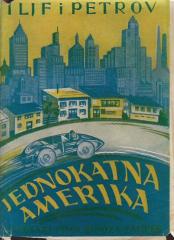
Jednokatna Amerika

Jednokatna Amerika

Ilja Iljf, Jevgenij Petrov

Nach dem großen Erfolg von „Zwölf Stühle“ und „Das goldene Kalb“ reisten Iljf und Petrov während der Weltwirtschaftskrise durch die Vereinigten Staaten, übersetzten ihre Beobachtungen in den Roman „One-Story America“ und schrieben weiterhin im satirischen

Naklada Binoza, 1939.
Croatian. Latin alphabet. Hardcover with dust jacket.
11.328.49
Poziv na pogubljenje

Poziv na pogubljenje

Vladimir Nabokov

Es besteht kein Zweifel, dass „Der Ruf zur Hinrichtung“ am reizvollsten ist, wenn man ihn so liest, wie er geschrieben wurde – als anti-utopischen oder anti-totalitären Roman…

Nolit, 1988.
Serbian. Latin alphabet. Hardcover with dust jacket.
12.329.24
12 stolica

12 stolica

Ilja Iljf, Jevgenij Petrov

Eine satirische Schatzsuche im postrevolutionären Russland. Der ehemalige Adlige Ippolit Matwejewitsch Worojaninow und der Trickbetrüger Ostap Bender jagen Wertgegenständen hinterher und entlarven dabei die Gier und Absurditäten der sowjetischen Gesellsch

Šareni dućan, 2013.
Croatian. Latin alphabet. Hardcover.
16.54
Djetinjstvo

Djetinjstvo

Lav Nikolajevič Tolstoj

„Kindheit“ (1852) ist das erste Buch einer autobiografischen Trilogie (mit „Aufwachen“ und „Jugend“), in der Tolstoi die Welt der Kindheit durch die Augen eines zehnjährigen Jungen, Nikolinka Irtenjew, erkundet – Unschuld, Freuden, Sorgen und erste Trauma

Svjetlost, 1971.
Croatian. Latin alphabet. Hardcover.
6.54