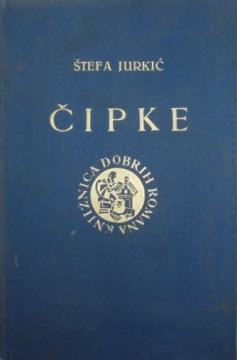
Čipke
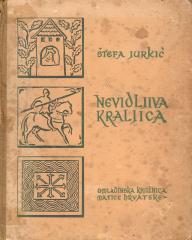
Lace (1929) by Štefa Jurkić is a romance novel with a Catholic message. A young heroine in France, through love and suffering, experiences conversion and finds meaning in her faith, inspired by the legend of St. Teresa.
Štefa (Štefanija) Jurkić (1895/1896–1971), a Croatian and Bosnian-Herzegovinian writer born in Cazin, was a teacher, the wife of the painter Gabrijel Jurkić, and a deeply devout Catholic author (a Dominican Tertiary). She wrote stories, legends, novels, and hagiographies, most often imbued with the Catholic spirit, ideals of holiness, conversion, and feminine purity.
The novel The Laces is her first novel. The work belongs to the popular Catholic fiction of the interwar period and was modeled after French Catholic novels. The plot is set in France, and the story centers on a young woman who goes through trials of love, disappointments, and inner struggle. The key motif is the miracle and saintly legend of St. Teresa (probably St. Teresa of Avila or the Little Flower of Jesus), which leads to the profound conversion of the main character.
The novel combines a romantic plot with a religious message: love for man turns into a sublime love for God, and worldly "laces" (decorations, vanity, fleeting passions) give way to spiritual beauty and sacrifice. The style is warm, sentimental and educated, intended primarily for girls and a wider Catholic audience. The work emphasizes themes of purity, renunciation, family and fidelity.
In the context of the author's oeuvre (Legends in Color, Fifteen Towers, The Cloak of the Little Crusader, Blažena Imelda Lambertini), Lace represents a transition from legend to novel form. Today it is read as an interesting document of Catholic literature of the 1920s and as a testimony to the ideals of female piety in interwar Croatia and Bosnia.
It is a rare antiquarian edition, but valuable for the study of Croatian Catholic prose.
One copy is available