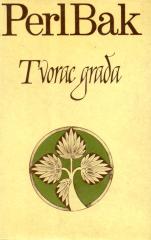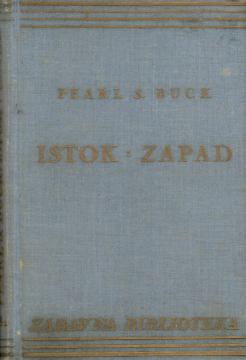
Istok – Zapad: roman kineske žene
East and West (1930) is the first novel by Pearl S. Buck. In the form of a confession, it depicts the profound conflict between East and West, tradition and modernity, through her marriage to an American-trained Chinese doctor.
Pearl S. Buck (1892–1973), an American writer who grew up in China as the daughter of a missionary, published the novel East Wind: West Wind in 1930. In Croatian translation, it appeared under the title East – West (a novel by a Chinese woman) and was very popular in the interwar and postwar period.
The novel is written in the first person – in the form of an intimate confession of a young Chinese woman Kwei-lan, a member of an old aristocratic family with bound feet. She is married to a young Chinese doctor who was educated in America and brought Western ideas. Through her story, Buck subtly contrasts two worlds: traditional China (Confucian customs, female subservience, large families, rituals) and the modern West (individualism, science, gender equality, new medicine).
The work is a subtle chronicle of cultural conflict and gradual changes within a Chinese family. The author with great understanding depicts the inner struggle of Kwei-lan, who slowly accepts new values, but does not completely reject her tradition. The novel is full of lyrical descriptions of Chinese life, landscapes and customs, and at the same time it is a criticism of the rigidity of old customs (e.g., foot binding, subordination of women).
East – West is the forerunner of Bucka's masterpiece The Good Earth. The style is simple, warm and humane, without pathos, which became the trademark of her writing. In its time, the novel was an important window into the Chinese soul and culture for the West.
In Croatian reception, it was part of popular fiction and is considered one of Bucka's most successful early works. Today, it is read as a classic example of literature about the cultural clash of East and West.
One copy is available