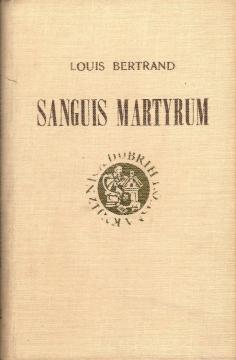
Sangus Martyrum - Krv mučenika: Roman iz 3. stoljeća
French writer and academic Louis Bertrand (1866–1941) wrote this powerful historical novel set in the 3rd century in 1918, depicting the persecution of Christians in North Africa, the martyrdom, and the triumph of the early Church during the time of Emper
The work is inspired by Tertullian's famous sentence "Sanguis martyrum semen christianorum" (The blood of martyrs is the seed of Christians) and depicts dramatic events in North Africa (Carthage and its surroundings) during the persecution of Christians under Emperor Valerian in the mid-3rd century.
The novel follows the fates of early Christians – bishops, priests, ordinary believers and martyrs – at a time when the Roman Empire was in deep crisis, and Christianity was spreading despite brutal persecution. Bertrand faithfully reconstructs the historical atmosphere: Roman authorities, pagan customs, internal conflicts in the Church and the unwavering faith of the first Christians. A special place is occupied by the figure of St. Cyprian, the Carthaginian bishop and martyr, who is one of the central characters of the novel.
The book is written in a lively, dramatic and sometimes pathetic style characteristic of the beginning of the 20th century. Bertrand, who lived in Algeria for a long time, shows with great respect and love for North Africa how it was the blood of martyrs that made possible the triumph of Christianity in the Roman Empire.
Croatian editions were popular in the 1930s, and the novel was read as a powerful religious and spiritual literature in turbulent times. Today it is appreciated as a classic Catholic historical novel that combines fidelity to historical facts with the emotional and epic power of storytelling.
One copy is available