Uskrsnuće
Rare book

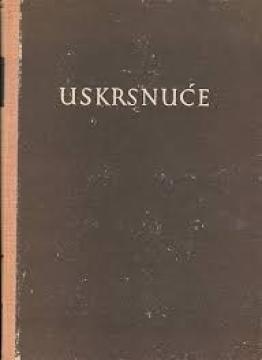
Uskrsnuće

Lav N. Tolstoj

In his last great novel, Resurrection (1899), Tolstoy combines literary artistry with profound moral and philosophical reflections, making it a key work of his late oeuvre.

In Tsarist Russia, Dmitri Nekhludoff, an aristocrat, enjoys his privileges as his past fades from his memory. Everything changes when, in court, he recognizes Katusha Maslova, accused of murder. She was once an innocent girl whom he seduced and abandoned, leaving her pregnant and without support, which pushed her into prostitution. The encounter shakes Nekhludoff, awakening a sense of guilt and setting him on a path of moral inquiry. He decides to abandon his comfortable life and follow Katusha into exile in Siberia, seeking redemption.

The journey reveals the cruelty of the justice system, the injustices of prison, and the hypocrisy of society. Through encounters with other prisoners, Nekhludoff becomes aware of deep social inequalities, while Katusha undergoes her own spiritual transformation. The novel explores themes of repentance, justice, and spiritual awakening, reflecting Tolstoy's Christian anarchism and pacifism.

Resurrection is the culmination of Tolstoy's late work, where he moves away from the epic breadth of War and Peace and the intimate psychology of Anna Karenina, focusing on moral reform and criticism of social institutions. The work reflects his radical philosophy, imbued with ideas about a simple life and rejection of materialism.

The novel was controversial for its harsh criticism of the church, government, and judiciary, leading to Tolstoy's excommunication from the Russian Orthodox Church in 1901. Readers and critics were divided: some praised its moral depth, while others found it too didactic. Nevertheless, the novel had a global impact, inspiring debates about justice and humanity, and is now considered a classic that illuminates Tolstoy's vision of a more just world.

Original title
Воскресение
Translation
Iso Velikanović
Editor
Oto Šolc
Dimensions
20 x 14 cm
Pages
413
Publisher
Matica hrvatska, Zagreb, 1948.
 
Latin alphabet. Hardcover.
Language: Croatian.

One copy is available

Condition:Used, good condition (visible signs of use)
Damages or inconvenience notice:
  • Worn covers
  • Traces of patina
 

Are you interested in another book? You can search the offer using our search engine or browse books by category.

You may also be interested in these titles

Rat i mir 3

Rat i mir 3

Lav Nikolajevič Tolstoj
Nakladni zavod Matice hrvatske, 1979.
Croatian. Latin alphabet. Hardcover with dust jacket.
5.98
Rat i mir 2

Rat i mir 2

Lav Nikolajevič Tolstoj
Nakladni zavod Matice hrvatske, 1979.
Croatian. Latin alphabet. Hardcover with dust jacket.
5.98
Kozaci

Kozaci

Lav Nikolajevič Tolstoj

The Cossacks (1863) is a key work in Tolstoy's early work, a bridge between his autobiographical works and his later epics. Inspired by Tolstoy's own experiences in the Caucasus, the work lays the foundation for his critique of civilization.

Nakladni zavod Matice hrvatske, 1979.
Croatian. Latin alphabet. Hardcover with dust jacket.
5.824.37
Moskva – Petuški

Moskva – Petuški

Venjedikt Jerofejev

Venedikt Yerofeyev's postmodern prose poem is today considered a classic of new Russian literature. It is compared to Gogol and Kharms for its poetics of absurdity, satire, and metaphysical depth.

LOM, 217.
Serbian. Cyrillic alphabet. Paperback.
11.24
Dijalektika prijelaznog perioda

Dijalektika prijelaznog perioda

Viktor Pelevin

The book represents the author's anthology - the largest part is the novel Čisla (Čisla), followed by the short story Macedonian Criticism of French Thought and several short stories (Odin vog, Akiko, Fokus-grupa, Gost na prazniku bon).

Disput, 2006.
Croatian. Latin alphabet. Paperback.
9.68
Olga Org: Roman iz ruskoga života

Olga Org: Roman iz ruskoga života

Jurij Slezkin

Yuri Slezkin's novel Olga Org, published in 1914, is one of the most significant works of Russian pre-revolutionary literature. The work has gone through more than ten editions and has been adapted for the theater, which testifies to its popularity and in

Naklada kraljevske zemaljske tiskare, 1923.
Croatian. Latin alphabet. Hardcover.
7.32