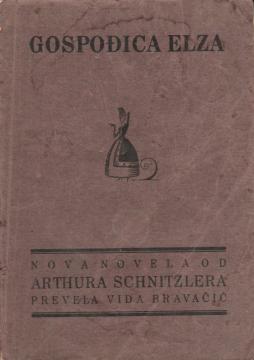
Gospođica Elza
The novella Miss Elsa (1924) depicts the inner monologue of a young girl from the Viennese bourgeoisie who faces a moral dilemma, family ruin, and her own sexuality in just a few dramatic hours.
Miss Elsa is one of Arthur Schnitzler's most famous novels. The work is written in the form of an interior monologue (the stream of consciousness technique), which was very fashionable at the time. The action takes place over the course of one day in a luxury hotel in an Austrian mountain resort.
Nineteen-year-old Elsa, a beautiful and intelligent girl from a failed Viennese family, receives a telegram from her mother asking her to save her father from prison by asking for money from a rich businessman who is willing to help – but on the condition that Elsa appears before him naked. Schnitzler masterfully enters Elsa's head, depicting her thoughts, fears, pride, erotic fantasies, shame and despair. The novel is a brilliant psychological study of a young woman caught between social conventions, family duty and her own desire for freedom and dignity.
The work is considered one of the highlights of Schnitzler's oeuvre and an important example of Viennese Modernism. Critics often point it out for its radical honesty in its depiction of female sexuality and its critique of bourgeois hypocrisy. The novella is a powerful and disturbing work that still impresses today with its storytelling technique and depth of psychological analysis.
One copy is available
- Damaged back