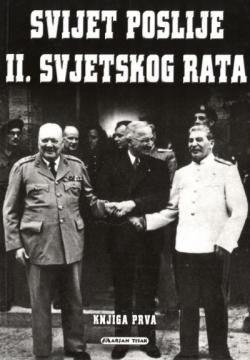
Svijet poslije II. svjetskog rata
No copies available
The last copy was sold recently.

No copies available
The last copy was sold recently.
Are you interested in another book? You can search the offer using our search engine or browse books by category.
Amir Duranović's book reconstructs in detail the dramatic year 1966 and the Fourth (Brion) Session of the Central Committee of the Communist Party of Yugoslavia (July 1–2, 1966), at which Aleksandar Ranković, the long-time head of the UDB and vice preside
The book explains how, after 1945, the world was divided into two opposing blocs: the Western (led by the USA) and the Eastern (led by the Soviet Union).
The book analyzes how conflicting historical narratives about the suffering and mass emigration of Italians from Istria and Rijeka developed in Croatia and Italy after World War II (1943–1956), debunking myths and encouraging an empathetic approach to the
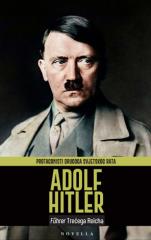
In the book, Joan Solé shows the life, ideology and rise of Adolf Hitler. The book explores how a charismatic but fanatical leader shaped a totalitarian regime and plunged the world into one of the most tragic wars in history.
A. A. Zhdanov's report from the founding meeting of the Informbiro (Poland, September 1947) on the division of the world into two camps – imperialist (USA) and anti-imperialist (USSR). A key document of the beginning of the Cold War.
G. A. Nasser's Philosophy of Revolution is a political manifesto and ideological program of the Egyptian Revolution of 1952. In it, Nasser explains the motives of the revolution, the role of Egypt in the Arab and African world, and the vision of Arab nati