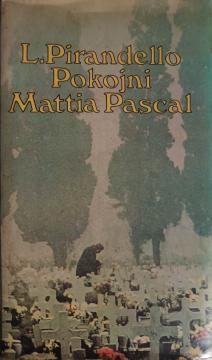
Pokojni Mattia Pascal

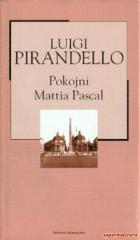
Pokojni Mattia Pascal

Luigi Pirandello

Luigi Pirandello's novel The Late Matthias Pascal (1904), a masterpiece of Italian literature, explores themes of identity, freedom, and social conventions through a tragic yet ironic story of a man trying to escape his life.

Matija Pascal, the main character, leads an unhappy life in the small town of Miragno. He works as a librarian, is married to Romilda, with whom he has an unhappy marriage, and is suffocated by financial burdens and family problems. When he accidentally learns that he has been declared dead due to an administrative error (after a body believed to be his is found), Matija sees an opportunity for a new beginning. Leaving the past behind, he takes on the identity of Adriano Meis and begins wandering around Italy and Monte Carlo.

At first, he enjoys his freedom, but soon realizes that without a legal identity he cannot fully live – he cannot get a job, get married or own property. Loneliness and the inability to create authentic relationships, especially after his love for Adriano Paleari, lead him to disappointment. In the end, Matija returns to Miragno, where he accepts his old life, but as a "deceased" – he lives on the margins, aware of the absurdity of existence.

Written in the spirit of modernism, the novel reflects Pirandello's philosophy of the fluidity of identity and the illusory nature of reality. Pirandello's humor and philosophical depth make the novel a universal story about the human search for freedom and the conflict between the individual and society.

Original title
Il fu Mattia Pascal
Translation
Filip Dominiković
Editor
Milan Mirić
Graphics design
Alfred Pal
Dimensions
21 x 12.5 cm
Pages
287
Publisher
Sveučilišna naklada Liber (SNL), Zagreb, 1982.
 
Latin alphabet. Hardcover with dust jacket.
Language: Croatian.

Two copies are available

Copy number 1

Condition:Used, excellent condition

Copy number 2

Condition:Used, very good condition
Damages or inconvenience notice:
  • Slight damage to the dust jacket
 

Are you interested in another book? You can search the offer using our search engine or browse books by category.

You may also be interested in these titles

Izopćena

Izopćena

Luigi Pirandello
Znanje, 1987.
Croatian. Latin alphabet. Paperback.
4.86 - 4.99
Pokojni Mattia Pascal

Pokojni Mattia Pascal

Luigi Pirandello

Luigi Pirandello's novel The Late Matthias Pascal (1904), a masterpiece of Italian literature, explores themes of identity, freedom, and social conventions through a tragic yet ironic story of a man trying to escape his life.

Jutarnji list, 2004.
Croatian. Latin alphabet. Hardcover with dust jacket.
4.56
Pariški maraton : Knjiga pisanja (Pariz21. i 22. oktobar 2023)

Pariški maraton : Knjiga pisanja (Pariz21. i 22. oktobar 2023)

At the end of the eighties, Damir Uzunović traveled to Paris and stayed there for less than a year. He was twenty years old at the time, and that exile episode would be formative for the literature he would later write.

Buybook, 2024.
Croatian. Latin alphabet. Hardcover.
12.22
Kreutzerova sonata, Hadži-Murat

Kreutzerova sonata, Hadži-Murat

Lav Nikolajevič Tolstoj

Kreutzer's sonata belongs to those works of Tolstoy that the writer adapted in many ways to his view on moral issues, on marital morality above all.

Civitas, 2004.
Croatian. Latin alphabet. Paperback.
4.983.74
Usta puna zemlje

Usta puna zemlje

Branimir Šćepanović

The novel "Usta puna zemlje" (1970), the masterpiece of the Serbian writer Branimir Šćepanović, is a psychologically in-depth explorer of the limits of the human soul, solitude and existential freedom, reminiscent of Kafka and Camus.

BIGZ, 1987.
Serbian. Latin alphabet. Paperback.
3.98
Stotina godina (antikronika)

Stotina godina (antikronika)

Dario Harjaček

The novel One Hundred Years by Dario Harjaček provides a panoramic view of Trešnjevka and its inhabitants through a century of changes, ideologies, and human destinies – a mosaic of Zagreb in which life, art, and history intertwine.

Oceanmore, 2025.
Croatian. Latin alphabet. Paperback.
13.42