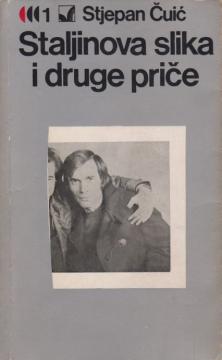
Staljinova slika i druge priče
Stjepan Čuić’s 1975 debut short-story collection presents allegorical, politically charged, and fantastic tales about totalitarianism, fear, ideological pressure, and the absurdity of everyday life.
The short story collection Stalin’s Portrait and Other Stories (Staljinova slika i druge priče) by Croatian writer Stjepan Čuić, published in 1975 (by the Zagreb-based publishing house Mladost), stands as one of the most significant and influential works of Croatian "fantastic" prose from the 1970s. With this collection, Čuić established himself as an authentic voice in domestic literature, blending elements of the grotesque, political satire, and the fantastic. The collection’s central motif is the relationship between the individual and a repressive ideological system. Through allegorical and absurd situations—where reality, rural and urban daily life, and fantastic twists intertwine—the author explores the mechanisms of fear, conformity, dogmatism, and censorship. The title story, like the others in the collection, addresses the consequences of a totalitarian mindset and political pressures on the ordinary person in post-war society in a manner that is both subtle and incisive. Written with polished craft and a keen sense for dialogue, dark humor, and narrative tension, Stalin’s Portrait and Other Stories marked a turning point in Čuić’s body of work. The book stands as a compelling literary monument to an era, offering—through its fusion of the fantastic and social criticism—deep insight into the psychology of subservience and the struggle for personal freedom.
One copy is available