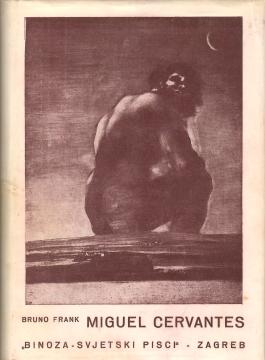
Miguel Cervantes: roman
Bruno Frank takes the reader on an imaginary journey through the life of Miguel Cervantes, a life filled with extreme highs and lows of 15th century Spain.
A novel in which the soul of Spain vibrates, that enigmatic country, which even now excites the whole world. In the classic prose of this novel, a large, colorful, fragment of history, rich in events, comes to life. At the center of the great plot is Cervantes, soldier, adventurer, writer of "Don Quixote", the most famous novel in the world.
Original title
Cervantes: Ein Roman
Translation
Tomislav Prpić
Editor
Ante Velzek
Illustrations
Francisco Goya
Dimensions
20 x 14 cm
Pages
253
Publisher
Naklada Binoza, Zagreb, 1936.
Distribution: 4,000 copies
Latin alphabet. Hardcover with dust jacket.
Language: Croatian.
Two copies are available
Copy number 1
The specimen is remarkably well preserved, with no traces of time or use.
Condition:Used, excellent condition
Added to cart!
Copy number 2
Condition:Used, good condition (visible signs of use)
Damages or inconvenience notice:
- Damaged back
- Traces of patina
- The cover is missing
Added to cart!