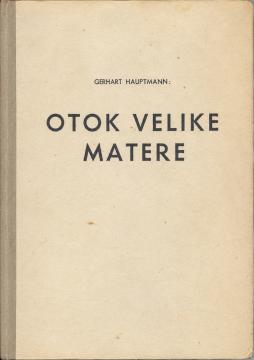
Otok velike matere

After a shipwreck, a group of women establishes an isolated island society governed by matriarchal principles. Their utopian experiment faces conflicts involving motherhood, gender, power and social restrictions.
Can a society governed by women establish a new social order free from the conflicts of the outside world? In Die Insel der großen Mutter (The Island of the Great Mother), Nobel Prize-winning German author Gerhart Hauptmann explores this question through an unusual utopian narrative.
Following a shipwreck, a group of women and children reaches an uninhabited tropical island. The survivors establish an independent community with its own laws, hierarchy and traditions, attempting to create a society without male domination.
When some women become pregnant, a religious explanation of motherhood develops around the deity Mukalinda. The birth of boys, however, presents a challenge to the new order. Male children are separated from the female community, and as they grow older, tensions emerge between institutional rules and human desires.
Hauptmann combines philosophical allegory, social satire and adventure fiction, examining gender relations, the origins of social institutions and the nature of authority.
Published in 1924, The Island of the Great Mother is a distinctive utopian and satirical novel, reflecting contemporary debates about women's emancipation, social organisation and the relationship between nature and civilisation.
One copy is available
- The cover is missing