Crkva sv. Petra i Pavla u Topolju

Crkva sv. Petra i Pavla u Topolju

Marija Keler

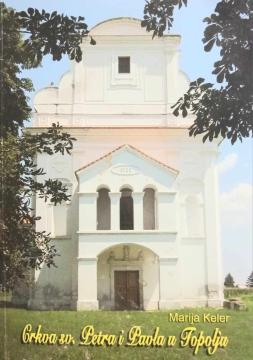
Church of St. Peter and Paul in Topolje, which is located outside the settlement, a kilometer away from Topolje on the road to Draž, has an interesting and somewhat creepy history.

Here are some facts about this church:

Year of construction: The first church in Baranja was built in 172212. The most interesting fact: During construction, its tower collapsed three times! The builders tried in vain to build the tower and the cross, but it is strange that lightning struck the cross of the church of St. Peter and Paul. After these unusual events, the builders gave up further attempts. Mysterious stories and legends: The church is located on a Turkish cemetery, where a great battle took place in 1687 in which many Ottomans lost their lives. Because of this, it is rumored that this is precisely the reason that the belfry never survived. Also, there are rumors that whoever tried to forcefully enter the church or desecrated it, did not fare well or even paid with his head. Architectural importance: Church of St. Peter and Paul is a cultural monument of the 1st category and is counted among the most important baroque sacral buildings in Croatia. Although this church is shrouded in mystery and legends, its architecture and history make it special and worthy of attention.

Prijevod
Snjezana Bobić, Janos Andoci, Ana Kovačevic, Vlatka Ivić
Urednik
Damir Doležal
Ilustracije
Damir Doležal, Marija Keler, Adam Tigandžin, Marija i Marko Topalov
Dimenzije
21 x 15 cm
Broj strana
181
Nakladnik
Matica hrvatska, Beli Manastir, 2011.
 
Latinica. Broširano.
Jezik: Hrvatski.
ISBN
978-9-53559-861-9

Nema primjeraka u ponudi

Poslednji primjerak je nedavno prodan.


Zanima Vas i neka druga knjiga? Možete pretražiti našu ponudu pomoću tražilice ili prelistati knjige po kategorijama.

Možda će Vas zanimati i ovi naslovi

Izabrani radovi

Izabrani radovi

Ljubo Boban

Selected Works of Academician Ljubo Boban (2022) brings together key texts on contemporary Croatian history of the 20th century. The foreword by Damir Agičić highlights Boban's methodological rigor and objectivity in researching sensitive topics.

Srednja Europa, 2022.
Hrvatski. Latinica. Tvrde korice.
24,52
Najveći hrvatski znanstvenici

Najveći hrvatski znanstvenici

Hrvoje Kekez

This book presents forty of the most distinguished Croatian scientists from the late Middle Ages to the present day, i.e. from Benedikt Kotruljević to Ivan Supek.

Mozaik knjiga, 2011.
Hrvatski. Latinica. Broširano.
6,32
Glavaš – kronika jedne destrukcije

Glavaš – kronika jedne destrukcije

Drago Hedl

In Glavaš – Chronicle of a Destruction, Drago Hedl reveals the rise and fall of Branimir Glavaš, through a story of power, crime, and moral decline in post-war Slavonia. The documentary research turns into a poignant chronicle of our society.

Novi Liber, 2010.
Hrvatski. Latinica. Broširano.
22,46
Komunizam i čovjek: Odnos vlasti i pojedinca u Hrvatskoj (1958.–1972.)

Komunizam i čovjek: Odnos vlasti i pojedinca u Hrvatskoj (1958.–1972.)

Josip Mihaljević

Josip Mihaljević's book analyzes the relationship between the government and the individual in communist Croatia (1958–1972), through repressive mechanisms, ideological pressures, and restrictions on personal freedom in the socialist system.

Hrvatski institut za povijest, 2016.
Hrvatski. Latinica. Tvrde korice.
17,26
Od Pola do Malnara: Putnici i istraživači u hrvatskoj kulturi od 13. do 20. stoljeća

Od Pola do Malnara: Putnici i istraživači u hrvatskoj kulturi od 13. do 20. stoljeća

Juraj Bubalo

The book by Zagreb travel writer and professor Juraj Bubalo is a kind of encyclopedia of Croatian travelers and explorers. Unique in Croatian non-fiction, it popularizes the culture of exploration and reminds us that Croats have been part of global discov

Meridijani, 2024.
Hrvatski. Latinica. Tvrde korice.
28,32
Na vratima Požeške doline

Na vratima Požeške doline

Dragutin Pavličević

A classic of local historiography, it depicts the history, geography and culture of the Požega Valley from prehistoric times to the modern era. The work describes the region's strategic position, the influences of the Romans, Ottomans and Habsburgs, with

Matica hrvatska, 1961.
Hrvatski. Latinica. Broširano.
12,36