
Studija o Hamletu
Rijetka knjiga
Antikvitet

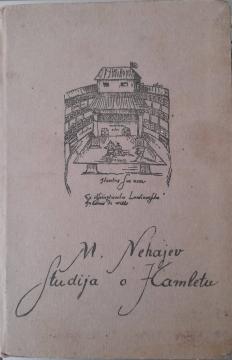
Studija o Hamletu

Milutin Cihlar Nehajev

A Study of Hamlet (1917) is a psychological-critical analysis of Shakespeare's masterpiece. Nehajev interprets the character of Hamlet as a modern intellectual – passive, ill-willed, cynical and fatalistic, faced with a corrupt world.

A Study of Hamlet is one of the most significant critical and essayistic works of Croatian literature of the first half of the 20th century. The text was originally published in serials in the journal Savremenik in 1915, and was later published as a standalone booklet.

Nehajev approaches Hamlet in a characteristic manner – not as a classical philologist or theater scholar, but as a modern psychologist and literary critic influenced by Taine, Brandes and European modernity. The focus of his study is not the plot of the drama, but the character of the Danish prince as a paradigmatic example of a modern intellectual. For Nehajev, Hamlet is a cynic and a despairing man, steeped in fatalism and determinism, a person of passive nature and sick will. His tragedy stems from the fact that he stands "outside of people and above people, and therefore against people".

The author emphasizes that Shakespeare's drama distends from Aristotle's rules, which is precisely the reason for its eternal modernity. Hamlet's impotence, disgust towards the world, resentment towards the environment and the belief that nobility cannot change the rotten order - Nehajev sees all of this as deeply contemporary. In Hamlet, he recognizes the type of personality that will later dominate his own novels and short stories (especially in The Escape): sensitive, intelligent, but paralyzed individuals who perish in the conflict with harsh reality.

The study is written in an elegant, subtle and analytical style, with rich language and deep insights into the human psyche. Nehajev combines philosophical reflection, psychological analysis and literary criticism, creating a text that is both an interpretation of Shakespeare and a self-portrait of a modern Croatian intellectual at the beginning of the 20th century.

This edition from 1917 is today a rarity on the antiquarian market and represents a valuable insight into Nehajev's critical oeuvre. The work testifies to the author's exceptional education, knowledge of European literature and ability to translate great classical themes into a contemporary, personal and national context. It is essential reading for lovers of Shakespeare, Croatian essay writing and modern literary criticism.

Dimenzije
18,5 x 13 cm
Broj strana
108
Nakladnik
Nakladni zavod Jug, Zagreb, 1917.
 
Latinica. Tvrde korice.
Jezik: Hrvatski.

Jedan primjerak je u ponudi

Stanje:Korišteno, u vrlo dobrom stanju
Dodano u košaricu!
 

Zanima Vas i neka druga knjiga? Možete pretražiti našu ponudu pomoću tražilice ili prelistati knjige po kategorijama.

Možda će Vas zanimati i ovi naslovi

Vuci

Vuci

Milutin Cihlar Nehajev

"Wolves" is a novel by Milutin Cihlar Nehajev that explores complex interpersonal relationships and moral dilemmas through the story of a wolf, a symbol of wilderness and freedom.

Spektar, 1974.
Hrvatski. Latinica. Tvrde korice.
2,68 - 3,76
Rakovica: o 60. godišnjici smrti Eugena Kvaternika

Rakovica: o 60. godišnjici smrti Eugena Kvaternika

Milutin Cihlar Nehajev

Nehajev's "Rakovica", in the edition edited by Blaž Jurišić, presents the Rakovica Rebellion, its causes and ideas. Nehajev did not finish the book due to his sudden death; it was completed and edited by Blaž Jurišić.

Matica hrvatska, 1932.
Hrvatski. Latinica. Tvrde korice.
5,424,34 - 8,26
Sretan kraj

Sretan kraj

Pavao Pavličić

In terms of genre, the novel is a combination of fantasy and crime. As in some earlier novels, the novelist touched on certain themes that "hang" in the air. It would be said that the writer anticipates real events.

Znanje, 1989.
Hrvatski. Latinica. Tvrde korice s ovitkom.
5,424,06
Tirena

Tirena

Marin Držić

Pastoral drama (comedy) in five acts, written in double-rhymed twelve-line stanzas (with eight-line stanzas in the lyrical parts), the oldest preserved play by Držić (premiered in 1548 in Dubrovnik, printed in 1551 in Venice).

Matica hrvatska, 1948.
Hrvatski. Latinica. Tvrde korice.
7,36
Moj zagrebački rukopis

Moj zagrebački rukopis

Zvonimir Milčec

Milčec is still just as in love with the city. He conquers it just as youthfully. The siege of Zagreb has made no one smaller. The city grows and the conqueror continues to conquer the unconquerable.

VBZ, 2007.
Hrvatski. Latinica. Tvrde korice.
14,9811,24
7 mladih

7 mladih

Neven Ušumović
MD, 1997.
Hrvatski. Latinica. Broširano.
3,98