Kritika praktičkoga uma
Retka knjiga

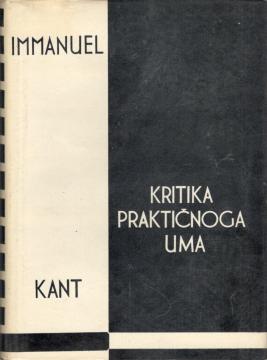
Kritika praktičkoga uma

Immanuel Kant
Kant

According to most interpreters, this is the most important of Immanuel Kant's three Critiques, and is, in fact, a continuation of the first Critique. For Kant, the term critique means a limit, a possibility. So he is not criticizing the practical mind her

"The theoretical use of the mind dealt with the objects of the power of cognition itself, and the criticism of that mind with regard to this use actually only referred to the pure power of cognition, because it aroused suspicion. Later, this suspicion was confirmed that this power of cognition is easily lost beyond its limits , among unattainable objects or even mutually contradictory concepts. With the practical use of the mind it is different. In it, the mind deals with the will's reasons the will of all intelligent beings), then this proves not only that the pure mind can be practical, but that only it, and not the empirically-limited mind, is practical in an unconditional way.

The basic law of a pure practical mind: Act in such a way that the maxim of your will can at all times be valid as a principle of general legislation." — Immanuel Kant

Naslov originala
Kritik der praktischen Vernunft
Prevod
Viktor D. Sonnenfeld
Urednik
Vladimir Filipović
Naslovnica
Zoltan Gabor
Dimenzije
20 x 14 cm
Broj strana
216
Izdavač
Kultura, Zagreb, 1956.
 
Latinica. Tvrde korice s omotom.
Jezik: Hrvatski.

Nema primeraka u ponudi

Poslednji primerak je nedavno prodat.
 

Zanima Vas i neka druga knjiga? Možete pretražiti našu ponudu pomoću pretrage ili prelistati knjige po kategorijama.

Možda će Vas zanimati i ovi naslovi

Koji su stvarni napreci koje je metafizika ostvarila u Nemačkoj od Lajbnicovih i Volfovih vremena

Koji su stvarni napreci koje je metafizika ostvarila u Nemačkoj od Lajbnicovih i Volfovih vremena

Kant
Immanuel Kant

Kant re-examines the development of German metaphysics from Leibniz and Wolff to critical philosophy, exploring the limits of human reason and the possibility of reliable metaphysical knowledge.

Svetovi, 2004.
Srpski. Ćirilica. Broširano.
9,99 €
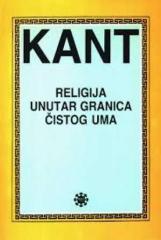
Religija unutar granica čistog uma

Religija unutar granica čistog uma

Kant
Immanuel Kant

Kant explores the relationship between religion, morality and human reason, questioning the nature of evil, freedom of will and the meaning of faith. A key work on the possibility of a religion based on ethics and rational thought.

BIGZ, 1990.
Srpski. Latinica. Tvrde korice s omotom.
16,24 €
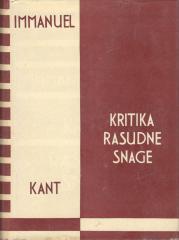
Kritika rasudne snage

Kritika rasudne snage

Kant
Immanuel Kant

Kant explores the nature of beauty, the sublime, and purposiveness in nature, linking aesthetics to human cognition and morality. A foundational work of modern aesthetics and the philosophy of art.

Kultura, 1957.
Hrvatski. Latinica. Tvrde korice s omotom.
23,46 €
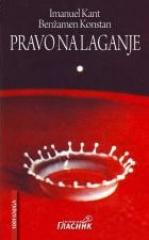
Pravo na laganje

Pravo na laganje

Kant, Constant
Immanuel Kant, Benjamin Constant

Kant argued that there is no right to lie because telling the truth is an absolute duty, while Constant advocated the possibility of an exception to the duty, arguing that one should lie for the common good, which sparked a famous philosophical debate.

Službeni glasnik, 2008.
Srpski. Latinica. Broširano.
8,367,52 €