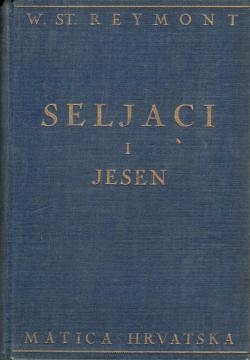
Seljaci I: Jesen
Retka knjiga
Antikvitet

Seljaci I: Jesen

Władysław Stanisław Reymont

The first part of an epic tetralogy about the life of a Polish rural community in the village of Lipce. The novel depicts the rhythm of rural work, everyday life, intrigues, conflicts over land and power, and the marriage of the old, wealthy peasant Macie

The first volume of the monumental tetralogy Peasants (Chłopi), for which Reymont received the Nobel Prize for Literature in 1924. The translation from Polish was made by Julije Benešić, who also wrote an extensive preface. This edition is considered one of the highest quality Croatian translations of Reymont's work between the two wars.

The action of the first part takes place in the village of Lipce at the end of the 19th century, in autumn. The novel depicts the rhythm of village life through the prism of the harvest, preparations for winter and large peasant festivities. The family of Maciej Boryna, the wealthiest peasant in the village, is at the center of the events. The old Boryna decides to marry the young and beautiful Jagna (Jagusia), which causes fierce conflicts with his own children, especially with his son Antko, who is also in love with Jagna.

Reymont masterfully depicts the entire social microcosm of the village: struggles for land, property and power, intrigue, gossip, love, hatred, drinking, religious rituals and the deep connection of the peasants with nature. The land is the central character here – at the same time mother, wealth and source of all conflicts.

Benešić's translation captures all the power and raw poetry of the original, including the rich peasant language and the rhythm of nature. Julij Benešić's preface is a valuable literary-historical study of Reymont and the place of the Peasants in European literature.

The tetralogy Peasants (Autumn – Winter – Spring – Summer) is one of the greatest masterpieces of European realism and naturalism of the 20th century. The work impresses with its epic breadth, collective portrait of the community and deep understanding of human nature. For many critics, this tetralogy is the most powerful literary depiction of the peasant world in world literature.

The 1928 Matica Hrvatska edition is today a sought-after antiquarian edition, especially appreciated for Benešić's translation and foreword. An indispensable read for lovers of epic prose, realism, and the classics of world literature.

Naslov originala
Chłopi
Prevod
Julije Benešić
Dimenzije
20 x 14 cm
Broj strana
287
Izdavač
Matica hrvatska, Zagreb, 1928.
 
Latinica. Tvrde korice.
Jezik: Hrvatski.

Primerak je dostupan kao deo kompleta knjiga "Seljaci I-IV"

Pregledajte komplet
Cena kompleta: 23,54
Dodato u korpu!

Seljaci I: Jesen

1. Seljaci I: Jesen

Władysław Stanisław Reymont

The first part of an epic tetralogy about the life of a Polish rural community in the village of Lipce. The novel depicts the rhythm of rural work, everyday life, intrigues, conflicts over land and power, and the marriage of the old, wealthy peasant Macie

Broj strana: 287
Stanje:Korišćeno, u vrlo dobrom stanju
Oštećenja / nepogodnosti:
  • Cracked back
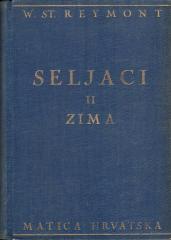
Seljaci II: Zima

2. Seljaci II: Zima

Władysław Stanisław Reymont

The second part of the epic tetralogy Peasants. The novel depicts the difficult winter life in the village of Lipce, deepens the conflicts within Boryna's family, the passionate relationship between Antko and Jagna, and the growing tensions in the village

Broj strana: 308
Stanje:Korišćeno, u odličnom stanju
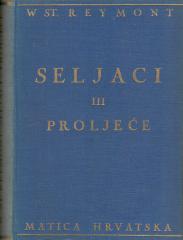
Seljaci III: Proljeće

3. Seljaci III: Proljeće

Władysław Stanisław Reymont

The third part of the epic tetralogy The Peasants. Spring brings the awakening of nature, but also new conflicts in the village of Lipce: the culmination of a love triangle, family drama and social tensions. The continuation of Nobel's epic of Polish peas

Broj strana: 378
Stanje:Korišćeno, u odličnom stanju
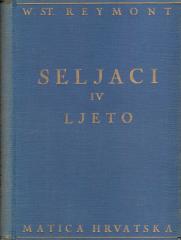
Seljaci IV: Ljeto

4. Seljaci IV: Ljeto

Władysław Stanisław Reymont

Peasants IV: Summer is the final and most powerful part of the epic tetralogy Peasants. The culmination of the conflict in the village of Lipce during the hot summer and harvest, the drama surrounding Jagna, the death of Maciej Boryna and the final closin

Broj strana: 317
Stanje:Korišćeno, u odličnom stanju
 

Zanima Vas i neka druga knjiga? Možete pretražiti našu ponudu pomoću pretrage ili prelistati knjige po kategorijama.

Možda će Vas zanimati i ovi naslovi

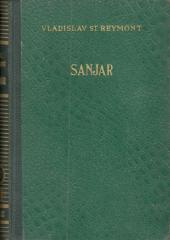
Sanjar

Sanjar

Wladyslaw St. Reymont

The novel The Dreamer by Polish Nobel laureate Władysław Stanisław Reymont, published in Croatian in 1944, is an introspective and philosophically tinged work that differs from his more famous realistic novels such as The Peasant.

Suvremena biblioteka, 1944.
Hrvatski. Latinica. Tvrde korice.
6,22
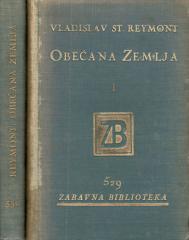
Obećana zemlja 1-2

Obećana zemlja 1-2

Władysław Stanisław Reymont

The novel The Promised Land, published in 1899, is one of the most significant works by Polish Nobel Prize winner Władysław Reymont. Set in the industrial city of Łódź at the end of the 19th century, the novel depicts rapid industrialization and its conse

Zabavna biblioteka - Naklada tiskare Narodnih novina, 1932.
Hrvatski. Latinica. Tvrde korice.
Knjiga se sastoji od dva toma
13,24
Štefica Cvek u raljama života

Štefica Cvek u raljama života

Dubravka Ugrešić

Do you like "lovelies"? Whatever you think about them, you'll enjoy this superb pastiche of trivial romance novels.

Mladinska knjiga, 1990.
Hrvatski. Latinica. Tvrde korice s omotom.
4,94
Strasti i druge pripovijetke

Strasti i druge pripovijetke

Isaac Bashevis Singer

Winner of the Nobel Prize for Literature in 1978, Isaac Bashevis Singer is a prolific writer of novellas and short stories. And in this collection of short stories, the author's penchant for mysticism, grotesque, folklore and eroticism is expressed.

Svjetlost, 1986.
Hrvatski. Latinica. Tvrde korice s omotom.
6,42
Tri mušketira 1-2

Tri mušketira 1-2

Alexandre Dumas

Dumas' Version der Geschichte schildert die Abenteuer von d'Artagnan und seinen Freunden von 1625 bis 1628.

Epoha, 1966.
Hrvatski. Latinica. Tvrde korice s omotom.
Knjiga se sastoji od dva toma
9,48
Proces

Proces

Franz Kafka

Kafka schrieb „Der Prozess“ zwischen 1914 und 1915 und veröffentlichte es posthum im Jahr 1925. Der Roman ist unvollendet, wurde aber um ein letztes Kapitel von Max Brod ergänzt. Ausgabe mit einem Vorwort von B. Živojinović und einem Nachwort von Walter K

BIGZ, 1990.
Srpski. Latinica. Broširano.
4,26