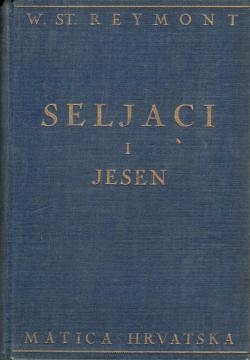
Seljaci I: Jesen
Rare book
Antique

Seljaci I: Jesen

Władysław Stanisław Reymont

The first part of an epic tetralogy about the life of a Polish rural community in the village of Lipce. The novel depicts the rhythm of rural work, everyday life, intrigues, conflicts over land and power, and the marriage of the old, wealthy peasant Macie

The first volume of the monumental tetralogy Peasants (Chłopi), for which Reymont received the Nobel Prize for Literature in 1924. The translation from Polish was made by Julije Benešić, who also wrote an extensive preface. This edition is considered one of the highest quality Croatian translations of Reymont's work between the two wars.

The action of the first part takes place in the village of Lipce at the end of the 19th century, in autumn. The novel depicts the rhythm of village life through the prism of the harvest, preparations for winter and large peasant festivities. The family of Maciej Boryna, the wealthiest peasant in the village, is at the center of the events. The old Boryna decides to marry the young and beautiful Jagna (Jagusia), which causes fierce conflicts with his own children, especially with his son Antko, who is also in love with Jagna.

Reymont masterfully depicts the entire social microcosm of the village: struggles for land, property and power, intrigue, gossip, love, hatred, drinking, religious rituals and the deep connection of the peasants with nature. The land is the central character here – at the same time mother, wealth and source of all conflicts.

Benešić's translation captures all the power and raw poetry of the original, including the rich peasant language and the rhythm of nature. Julij Benešić's preface is a valuable literary-historical study of Reymont and the place of the Peasants in European literature.

The tetralogy Peasants (Autumn – Winter – Spring – Summer) is one of the greatest masterpieces of European realism and naturalism of the 20th century. The work impresses with its epic breadth, collective portrait of the community and deep understanding of human nature. For many critics, this tetralogy is the most powerful literary depiction of the peasant world in world literature.

The 1928 Matica Hrvatska edition is today a sought-after antiquarian edition, especially appreciated for Benešić's translation and foreword. An indispensable read for lovers of epic prose, realism, and the classics of world literature.

Original title
Chłopi
Translation
Julije Benešić
Dimensions
20 x 14 cm
Pages
287
Publisher
Matica hrvatska, Zagreb, 1928.
 
Latin alphabet. Hardcover.
Language: Croatian.

A copy is available as part of the book set "Seljaci I-IV"

Browse the set
Books set price: 23.54

Seljaci I: Jesen

1. Seljaci I: Jesen

Władysław Stanisław Reymont

Prvi dio epske tetralogije o životu poljske seoske zajednice u selu Lipce. Roman prikazuje ritam seoskih radova, svakodnevicu, intrige, sukobe oko zemlje i moći te brak starog bogatog seljaka Macieja Boryne s mladom i lijepom Jagnom.

Pages: 287
Condition:Used, very good condition
Damages or inconvenience notice:
  • Napuknut hrbat
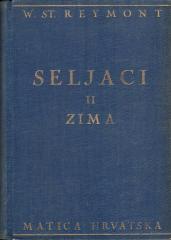
Seljaci II: Zima

2. Seljaci II: Zima

Władysław Stanisław Reymont

The second part of the epic tetralogy Peasants. The novel depicts the difficult winter life in the village of Lipce, deepens the conflicts within Boryna's family, the passionate relationship between Antko and Jagna, and the growing tensions in the village

Pages: 308
Condition:Used, excellent condition
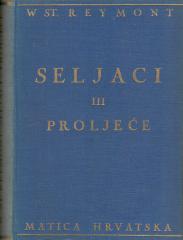
Seljaci III: Proljeće

3. Seljaci III: Proljeće

Władysław Stanisław Reymont

The third part of the epic tetralogy The Peasants. Spring brings the awakening of nature, but also new conflicts in the village of Lipce: the culmination of a love triangle, family drama and social tensions. The continuation of Nobel's epic of Polish peas

Pages: 378
Condition:Used, excellent condition
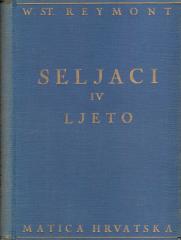
Seljaci IV: Ljeto

4. Seljaci IV: Ljeto

Władysław Stanisław Reymont

Peasants IV: Summer is the final and most powerful part of the epic tetralogy Peasants. The culmination of the conflict in the village of Lipce during the hot summer and harvest, the drama surrounding Jagna, the death of Maciej Boryna and the final closin

Pages: 317
Condition:Used, excellent condition
 

Are you interested in another book? You can search the offer using our search engine or browse books by category.

You may also be interested in these titles

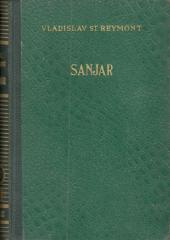
Sanjar

Sanjar

Wladyslaw St. Reymont

The novel The Dreamer by Polish Nobel laureate Władysław Stanisław Reymont, published in Croatian in 1944, is an introspective and philosophically tinged work that differs from his more famous realistic novels such as The Peasant.

Suvremena biblioteka, 1944.
Croatian. Latin alphabet. Hardcover.
6.22
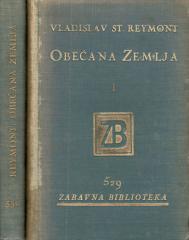
Obećana zemlja 1-2

Obećana zemlja 1-2

Władysław Stanisław Reymont

Roman Obećana zemlja, objavljen 1899. godine, jedno je od najznačajnijih dela poljskog nobelovca Vladislava Rejmonta. Smešten u industrijski grad Lodž na kraju 19. veka, roman prikazuje brzu industrijalizaciju i njene posledice po društvo.

Zabavna biblioteka - Naklada tiskare Narodnih novina, 1932.
Croatian. Latin alphabet. Hardcover.
The book consists of two volumes
13.24
Tri mušketira 1-2

Tri mušketira 1-2

Alexandre Dumas

Dimina verzija priče prikazuje avanture d'Artanjana i njegovih prijatelja od 1625. do 1628. godine.

Epoha, 1966.
Croatian. Latin alphabet. Hardcover with dust jacket.
The book consists of two volumes
9.48
Magična ljubavna kutijica

Magična ljubavna kutijica

Santa Montefiore

The Magic Love Box (2002) follows the life story of Federica Campione, which begins in Vina del Mar, Chile, in the summer of 1982. Montefiore creates an epic story of growth, where the magic is not only in the box, but in the courage to let go of the past

Mozaik knjiga, 2006.
Croatian. Latin alphabet. Hardcover.
7.34
Kreutzerova sonata, Hadži-Murat

Kreutzerova sonata, Hadži-Murat

Lav Nikolajevič Tolstoj

Kreutzer's sonata belongs to those works of Tolstoy that the writer adapted in many ways to his view on moral issues, on marital morality above all.

Civitas, 2004.
Croatian. Latin alphabet. Paperback.
4.98
I ne reče ni reči

I ne reče ni reči

Heinrich Böll

In Boll's novels, one of the central themes is the attempt to preserve basic moral values ​​in a time of terror, as well as in a period of material prosperity and corruption.

Svjetlost, 1965.
Serbian. Latin alphabet. Paperback.
3.22 - 3.98