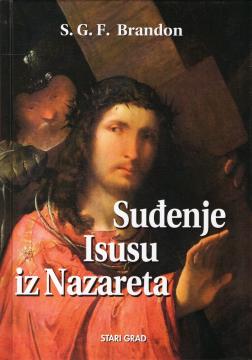
Suđenje Isusu iz Nazareta
Dobro potkrijepljena, sažeta i provokativna, knjiga poznatog povjesničara religije S. G. F. Brandona, ostaje utjecajna u biblijskoj kritici, inspirirajući autore poput Reze Aslana. Pokazuje kako je povijest uglavnom pišu pobjednici.
Britanski povjesničar religije Samuel G. F. Brandon u ovoj klasičnoj studiji rekonstruira suđenje Isusu na temelju Evanđelja, ali kritički: evanđeoske priče nisu povijest, već teološka propaganda napisana nakon razaranja Hrama 70. n. e., kako bi se rimski okupatori prikazali blagonaklonima, a Židove krivcima za krst.
Brandon, nastavljajući tezu iz knjige Isus i zeloti (1967.), vidi Isusa kao židovskog revolucionara, vođu zelota protiv Rimljana. Evanđelja (posebno Markovo) modificira događaje: Pilat nije oklijevao osuđivati Isusa (kao u Luki), već je brzo pogubio pobunjenika zbog prijetnje caru („Kralj je Židov“). Židovski Sanhedrin nije imao pravo na smrtnu kaznu, pa je suđenje bilo rimsko, ne vjersko (protiv farizeja).
Knjiga analizira neslaganja: Matej i Luka ublažavaju Marka da bi Židovima pripisali krivnju („Njegova krv na nas“), a Ivan dodaje teološke motive. Koristeći Josifa Flavija i arheologiju, Brandon objašnjava kontekst: Judeja 4. pr. Kr. – 70. n. e. bila je pod rimskom okupacijom, puna pobuna. Evanđelja štite kršćane od progonstva, prikazujući Isusa kao žrtvu Židova, a ne Rima.
Multiple copies are available